
Introduction
Core drilling is a fundamental operation in modern construction, civil engineering, and infrastructure development. Whether it is routing utility pipes, installing HVAC systems, or creating openings for structural modifications, diamond core drilling delivers precision and efficiency. However, the complexity of these projects multiplies exponentially when operations shift off the ground.
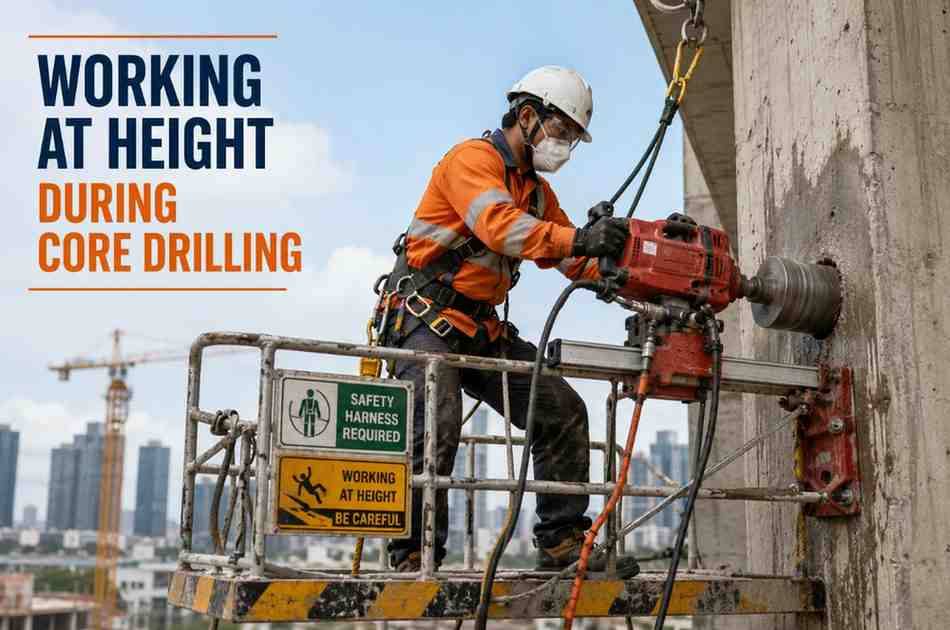
Working at height during core drilling introduces severe gravity-related risks, including falls from elevated platforms, falling objects, equipment instability, and structural collapse hazards.
At Core Cutting India, safety is the cornerstone of every operational phase. Executing precision cuts high above the ground requires rigorous planning, specialized engineering controls, and strict adherence to industrial safety standards. This guide explores the critical aspects of working at height during core drilling, covering everything from risk management and equipment selection to regulatory compliance and emergency response.
Understanding the Risks of High-Level Core Drilling
Before initiating any drilling operation at an elevation, understanding the specific hazards involved is critical for formulating effective mitigation strategies. High-level core drilling differs significantly from ground-level work due to several compounding risk factors:
1. Fall Hazards
The most immediate danger is the risk of workers, tools, or heavy machinery falling from elevated surfaces such as scaffolding, suspended platforms, mobile elevating work platforms (MEWPs), or uncompleted structural floors.
2. Equipment Weight and Torque Reaction
Core drilling machines are heavy, and powerful rigs generate substantial rotational torque. When operating at height, a sudden jam or kickback from the drill bit can destabilize the operator or the mounting platform, leading to tipping or structural failure.
3. Water and Slurry Management
Core drilling is predominantly a wet process. Water is pumped continuously through the diamond drill bit to cool the segment and suppress dust. At height, this wastewater creates slippery surfaces on platforms and introduces electrical hazards if runoff contacts power sources.
4. Structural Integrity Uncertainty
Drilling into existing concrete structures means operators may encounter compromised reinforcement bars (rebar), post-tension cables, or weakened concrete. If a structural element loses integrity while supporting elevated platforms, catastrophic failure can occur.
Pre-Planning and Risk Assessment
A successful high-level core drilling project begins long before any equipment is hoisted into the air. Comprehensive pre-planning minimizes unforeseen complications and ensures regulatory compliance.
Conducting a Job Safety Analysis (JSA)
A detailed JSA must be performed for every elevated core drilling task. This analysis identifies specific hazards associated with the exact location, height, weather conditions, and structural material. Every team member must review the JSA during toolbox talks prior to shift commencement.
Engineering Approvals and Load Calculations
Elevated platforms, scaffolding, and hanging cradles must be engineered, erected, and inspected by certified competent persons. The combined weight of the core drilling machine, anchor systems, water supply tanks, slurry containment systems, and the operators must not exceed the safe working load (SWL) of the temporary structure.
Permit-to-Work (PTW) Systems
High-risk activities such as working at height and operating heavy machinery require formal authorization. A robust PTW system ensures that all safety checklists, rescue plans, and equipment inspections are signed off by safety officers before work begins.
Essential Safety Equipment and Personal Protective Equipment (PPE)
When working at height, engineering controls provide the primary line of defense, backed up by reliable Personal Protective Equipment (PPE).
Fall Protection Systems
-
Full-Body Harnesses: Operators working near unprotecting edges or on suspended scaffolding must wear certified full-body harnesses that fit snugly and distribute impact forces evenly across the thighs, pelvis, chest, and shoulders.
-
Lanyards and Lifelines: Shock-absorbing lanyards or self-retracting lifelines (SRLs) must be securely anchored to independent, certified anchor points capable of withstanding at least 2,300 kg (5,000 lbs) per worker, or designed in accordance with local engineering standards.
-
Guardrails and Toe Boards: Elevated platforms must feature robust top rails, mid-rails, and toe boards to prevent workers and loose tools from slipping over the edge.
Specialized PPE for Core Drilling
-
Eye and Face Protection: Safety goggles and full face shields protect against flying concrete chips and high-pressure water spray.
-
Hearing Protection: Core drilling generates high decibel levels. Earplugs or earmuffs with appropriate Noise Reduction Ratings (NRR) are mandatory.
-
Footwear: Steel-toed, slip-resistant boots protect against heavy falling objects and wet, slick scaffolding surfaces.
-
High-Visibility Clothing: Ensures operators remain visible to crane operators, site managers, and ground personnel.
Choosing the Right Access Equipment for Core Drilling
Selecting the correct platform to access the drilling zone depends on project specifications, height requirements, and site layout constraints.
1. Mobile Elevating Work Platforms (MEWPs)
Scissor lifts and boom lifts are widely used for vertical and horizontal elevated access.
-
Scissor Lifts: Provide a stable, spacious platform for workers and equipment when drilling vertical overhead slabs, provided the floor below is level and stable.
-
Boom Lifts (Articulated and Telescopic): Ideal for reaching difficult angles, facades, or exterior walls where ground support is limited.
2. Scaffold Systems
Modular tube-and-coupler or system scaffolds are built directly against structures to support heavy-duty core drilling rigs. They must be tied off securely to the building facade at regular intervals to prevent swaying or tipping under drilling loads.
3. Suspended Scaffolding and Cradles
For high-rise buildings, bridges, and dams where ground-based scaffolding is impractical, roof-rigged suspended cradles are utilized. These systems require rigorous daily wire rope inspections and independent backup safety lines.
Operational Best Practices During High-Level Core Drilling
Executing the core drilling process safely at height demands strict adherence to operational protocols.
Secure Mounting of Drilling Rigs
Unlike hand-held core drills—which should never be used for heavy-duty work at height—rig-mounted drills must be securely anchored.
-
Use heavy-duty anchor bolts or vacuum base systems (only on smooth, non-porous, perfectly flat horizontal surfaces).
-
Check anchor torque levels before applying power to the drill motor to prevent the rig from breaking loose under high torque.
Effective Slurry and Water Management
Water management is critical on elevated platforms to prevent slip hazards and environmental contamination.
-
Install rubber slurry collection rings (catch rings) connected to industrial wet vacuums directly beneath the drill bit.
-
Route discharge hoses securely along scaffold legs to ground-level containment tanks rather than letting water cascade down open building faces.
Managing Cords, Hoses, and Debris
Cluttered workspaces at height invite trips and falls.
-
Suspend electrical cords and water supply hoses off the platform deck using specialized hooks or overhead catenary lines.
-
Maintain a clean work zone by continuously clearing out extracted concrete cores and rock fragments into heavy-duty debris bags.
Emergency Preparedness and Rescue Planning
No matter how stringent safety protocols are, a comprehensive emergency response plan must be established before any high-altitude work begins.
-
Suspension Trauma Mitigation: If a worker falls and is suspended in a harness, orthostatic intolerance (suspension trauma) can set in within minutes. Rescue plans must ensure retrieval within 15 minutes.
-
On-Site Rescue Equipment: Rescue pole kits, descent control devices, and trained rescue personnel must be readily available on site.
-
First Aid and Communication: Ensure clear radio communication between elevated workers and ground teams, along with fully stocked first aid kits tailored for trauma and water-related injuries.
Conclusion
Working at height during core drilling is an intricate task that blends engineering precision with uncompromising safety standards. By implementing thorough risk assessments, utilizing certified access and fall protection equipment, and enforcing disciplined operational habits, construction teams can eliminate hazards and achieve flawless project outcomes.
For professional, safe, and precise structural modification solutions, partner with industry leaders who prioritize safety at every elevation. Reach out to Core Cutting India today to discuss your next high-level core drilling project.