
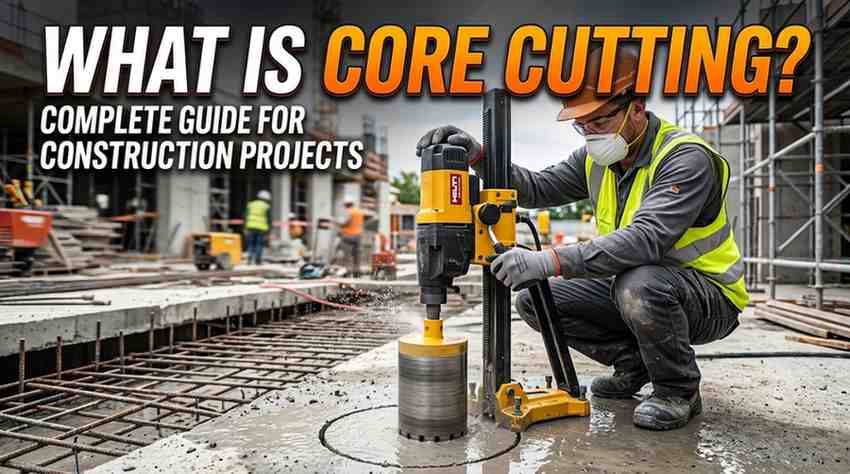
If you've ever watched a contractor cut a perfectly round hole through a concrete wall or slab without smashing it to pieces, you've seen core cutting in action. It's one of those construction techniques that quietly makes modern buildings possible — letting plumbers run pipes, electricians pull cables, and HVAC technicians fit ducts, all without compromising the structure around them.
Whether you're a homeowner planning a renovation, a builder managing a commercial project, or a contractor looking to understand the process better, this guide breaks down everything you need to know about core cutting — what it is, how it works, where it's used, and how to choose the right professionals for the job.
What Is Core Cutting?
Core cutting is a precision drilling technique used to create clean, circular holes through hard materials like concrete, RCC (Reinforced Cement Concrete), brick walls, stone, and masonry. Instead of breaking through a surface with a hammer and chisel, core cutting uses a diamond-tipped drill bit mounted on a powerful motor to bore a smooth, accurate hole — without cracking the surrounding structure.
The technique gets its name from the "core" — the cylindrical piece of material that's removed once the drill bit cuts all the way through. This is why core cutting is sometimes called core drilling or diamond core drilling.
It's a method trusted across construction, renovation, plumbing, and electrical works because it's fast, precise, and far less disruptive than traditional demolition tools.
How Does Core Cutting Work?
Core cutting machines work on a simple but effective principle: a hollow, cylindrical bit lined with diamond segments rotates at high speed and grinds through the material layer by layer.
Here's a quick breakdown of the process:
- Marking the spot – The exact location and diameter of the hole are measured and marked.
- Setting up the machine – The core cutting machine is mounted on a stand or held steady, depending on the wall or slab thickness.
- Wet or dry drilling – Most professional jobs use wet drilling, where water cools the diamond bit and flushes out debris, reducing dust and extending the tool's life. Dry drilling is used in situations where water isn't practical, such as near electrical points.
- Cutting through – The drill bores through the material at a controlled speed, cutting a clean, round opening.
- Removing the core – Once the cut is complete, the cylindrical concrete core is pulled out, leaving a smooth-edged hole ready for pipes, cables, or ducting.
This process produces holes ranging anywhere from 50mm to 300mm or more in diameter, depending on the requirement.
Why Core Cutting Is Important in Construction
Construction projects constantly need openings for utilities — but cutting into concrete or RCC the wrong way can weaken a structure or create unsafe cracks. Core cutting solves this problem in a few key ways:
- Structural safety – Diamond drilling causes minimal vibration, so it doesn't stress or crack the surrounding concrete the way hammering does.
- Precision – Holes come out exactly the size and shape needed, with no rough edges to patch up later.
- Speed – A trained team can complete multiple cuts in a fraction of the time manual methods would take.
- Less mess – Wet drilling keeps dust to a minimum, which matters a lot on occupied sites, hospitals, schools, or residential buildings.
- Works on reinforced concrete – Unlike basic drilling tools, core cutting machines can cut through RCC with embedded steel reinforcement without damaging the equipment or the structure.
This combination of safety, precision, and efficiency is exactly why core cutting has become the standard method for utility openings across Indian construction sites.
Common Applications of Core Cutting
Core cutting isn't limited to one type of project — it shows up in almost every stage of construction and renovation. Some of the most common uses include:
- Plumbing installations – Creating openings for water supply lines and drainage pipes. This is especially common for RCC core cutting for plumbing pipes, where clean, leak-proof openings matter most.
- Electrical conduits and cabling – Running wiring through walls, floors, and ceilings without exposed, jagged holes.
- AC and HVAC installation – Drilling precise holes for split AC pipes and ducting. Many customers specifically search for core cutting services for AC installation when setting up new units.
- Exhaust fans and ventilation – Cutting wall openings for kitchen and bathroom exhaust fans is one of the most frequent residential requests. Read more in our guide to exhaust fan core cutting services.
- CCTV and data cabling – Creating small, clean holes for security cameras and network cables.
- Structural modifications – Beam and slab cutting for renovations, staircases, or new floor openings.
- Commercial and industrial projects – Large-scale buildings often need diamond core cutting for utility risers, fire safety systems, and service shafts — covered in detail in our piece on diamond core cutting for commercial buildings.
Core Cutting vs. Wall Cutting vs. Slab Cutting
These terms often get used interchangeably, but they refer to slightly different jobs:
| Service | What It Does | Common Use |
|---|---|---|
| Core Cutting | Cuts round holes using a cylindrical diamond bit | Pipes, cables, conduits, exhaust fans |
| Wall Cutting | Cuts rectangular or square openings using a diamond saw blade | Doors, windows, AC ducts |
| Slab Cutting | Cuts openings in floor or roof slabs | Plumbing risers, staircases, drainage |
| Beam Cutting | Modifies structural beams for renovations | Structural alterations, retrofitting |
If you're planning a project, our core cutting service, wall cutting service, slab cutting service, and beam cutting service pages can help you figure out exactly which one applies to your job.
Tools and Machines Used for Core Cutting
Professional contractors typically rely on:
- Diamond core drills – Electric or hydraulic machines fitted with diamond-tipped hollow bits.
- Core bits – Available in various diameters (50mm–300mm+) depending on the pipe or cable size needed.
- Wet drilling rigs – Use water circulation to cool the bit and control dust.
- Anchor stands – Keep the drill steady for accurate, vibration-free cuts, especially on vertical walls.
Using the right combination of machine and bit size is what separates a clean, professional cut from a cracked or oversized hole — which is why hiring verified, experienced contractors matters.
Factors That Affect Core Cutting Cost
Several variables influence what you'll pay for core cutting services:
- Hole diameter – Larger holes cost more due to bit size and drilling time.
- Material type – RCC, brick, and stone all require different cutting speeds and bit grades.
- Wall or slab thickness – Thicker structures take longer to cut through.
- Number of holes – Bulk jobs often come at a better per-hole rate.
- Location – Rates can vary slightly by city and contractor availability.
In India, core cutting typically costs between ₹150 and ₹800 per hole depending on these factors. You can get an instant, accurate estimate using our free Rate Calculator.
Safety Considerations in Core Cutting
Because core cutting involves rotating diamond blades and heavy machinery, safety protocols matter. Reputable contractors will:
- Check for embedded electrical or plumbing lines before drilling
- Use proper PPE — gloves, eye protection, and dust masks
- Secure the drilling rig to prevent slippage
- Manage water runoff during wet drilling to avoid slip hazards
- Assess the structure to avoid cutting into critical load-bearing reinforcement
This is one of the biggest reasons to hire trained, verified professionals rather than attempting core cutting as a DIY job.
How to Choose the Right Core Cutting Contractor
When hiring for a core cutting job, look for:
- Verified credentials – Registered businesses with a track record of completed projects.
- The right equipment – Diamond core drills suited to your material and hole size.
- Transparent pricing – Clear, upfront rates with no hidden charges.
- Genuine reviews – Real customer ratings, not just claims.
- Local availability – Faster response times and better familiarity with local building norms.
At Core Cutting India, we connect customers with verified core cutting contractors across 500+ cities and 28 states — covering everything from RCC core cutting to wall, slab, beam, and door cutting services. Every contractor on the platform goes through business verification and customer rating checks before being listed, so you can book with confidence.
Get a Core Cutting Expert Near You — Talk to Us Today
Need a reliable core cutting contractor for your home, office, or construction site? Don't wait on a job that needs precision and safety.
📞 Call us now: 7009679903 💬 WhatsApp us instantly: Chat on WhatsApp 📧 Email: [email protected] 🌐 Visit: corecuttingindia.com
Get instant quotes, compare verified contractors, and book the right expert for your project — all in a few clicks.
Frequently Asked Questions (FAQs)
1. What is core cutting in construction? Core cutting is a diamond-drilling technique used to cut precise, circular holes through concrete, RCC, brick, and stone surfaces — commonly used for plumbing, electrical, AC, and structural work.
2. How is core cutting different from regular drilling? Regular drills bore small holes for screws or anchors. Core cutting uses a hollow, diamond-tipped bit to cut much larger holes (50mm to 300mm+) cleanly through hard, reinforced materials like RCC.
3. Is core cutting safe for load-bearing walls? Yes, when done correctly by trained professionals. Experts assess the structure first and use controlled drilling techniques to avoid weakening load-bearing elements. Always hire verified contractors for such jobs.
4. How much does core cutting cost in India? Core cutting typically costs between ₹150 and ₹800 per hole, depending on diameter, material, and location. Use the Rate Calculator for an instant estimate.
5. How long does a core cutting job take? A single hole usually takes 10–30 minutes depending on material thickness and diameter. Larger or bulk jobs may take a few hours.
6. Can core cutting be done indoors without much mess? Yes. Professional wet drilling techniques significantly reduce dust, making core cutting suitable for occupied homes, offices, hospitals, and schools.
7. Where can I find verified core cutting contractors near me? You can search by city and service on Core Cutting India to find verified, rated contractors in 500+ cities across India, or simply call 7009679903 for direct assistance.
Looking for trusted core cutting services near you? Core Cutting India connects you with verified RCC, wall, slab, and beam cutting contractors across India. Call 7009679903, WhatsApp us, or email [email protected] to get started today.