
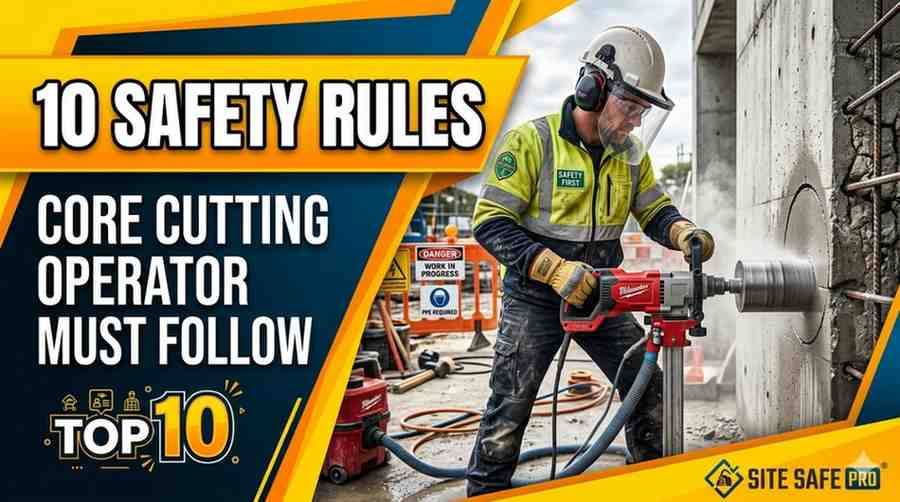
A core cutting operator works with high-speed diamond drills, electrically powered machines, and concrete surfaces that often hide wiring, pipes, and rebar. One missed precaution can lead to electric shock, structural damage, or serious injury. That's why safety isn't an optional add-on in this trade — it's the difference between a clean, professional job and a costly accident.
Whether you're a contractor, a site supervisor, or a homeowner hiring someone for core cutting work, this guide breaks down the 10 safety rules that every trained operator should follow on every single job.
1. Always Scan for Hidden Utilities Before Cutting
Before marking a single cutting point, an operator must scan the wall or slab for electrical conduits, plumbing lines, and gas pipes using a rebar or utility detector. Concrete and brick walls rarely show what's running inside them, and drilling blindly into a live wire or pressurized pipe is one of the most common causes of on-site accidents in core cutting work.
2. Confirm the Structure Is Safe to Cut
Not every wall, beam, or slab can be cut without risk. Load-bearing walls and structural beams need an engineering check before any drilling begins. An experienced operator should know the difference between a partition wall and a structural element — and when in doubt, pause the work rather than guess. This rule applies just as strongly to beam cutting as it does to standard core cutting.
3. Inspect the Machine and Diamond Bit Before Every Use
A worn or damaged diamond bit can wobble during operation, increasing the risk of kickback and uneven cuts. Operators should check the bit for cracks or excessive wear, confirm the machine's water line and seals are intact, and test the power cable for fraying or exposed wiring before switching the machine on.
4. Use RCD/ELCB-Protected Power Sources
Core cutting machines run on electricity while using water for cooling — a combination that demands serious caution. Power should always be drawn from an RCD (Residual Current Device) or ELCB-protected socket, which cuts power instantly if a leakage current is detected. Cables should never run through standing water or damp areas.
5. Wear Complete Personal Protective Equipment (PPE)
No operator should start cutting without proper PPE: safety goggles to protect against flying debris, ear protection against prolonged machine noise, a dust mask or respirator, and non-slip gloves for secure handling. Skipping PPE "just for a quick job" is one of the most preventable causes of operator injury.
6. Always Prefer Wet Drilling Over Dry Drilling
Wet, water-cooled drilling keeps dust levels dramatically lower than dry drilling, which protects the operator's lungs and reduces airborne silica dust — a known respiratory hazard. Wet drilling also keeps the diamond bit cooler, extending its life and reducing the chance of overheating-related failure.
7. Secure the Machine Properly Before Drilling
Whether cutting a vertical wall or an overhead slab, the core cutting rig must be firmly anchored or held in position before the motor starts. An unsecured machine can slip or jerk when the bit makes contact with rebar, risking injury to the operator and damage to the surrounding surface. This applies equally to wall cutting and slab cutting jobs, where machine weight and cutting angle add extra risk.
8. Keep the Work Zone Clear of Bystanders
Children, pets, and uninvolved workers should stay well away from the cutting area at all times. Beyond the noise and dust, there's a real risk of flying debris, water spray, or accidental contact with the machine. A clearly marked or cordoned-off work zone is standard practice for any professional operator.
9. Never Force the Drill Through Resistance
If the diamond bit hits embedded rebar or unexpectedly hard material, the correct response is to stop, reassess, and adjust technique — not to push harder. Forcing the drill through resistance increases the risk of bit breakage, machine kickback, and structural cracking around the hole.
10. Inspect and Clean Up After Every Cut
Once the hole is cut, the operator should check the edges for cracking, remove all dust and slurry from the site, confirm no electrical or plumbing lines were exposed or damaged, and temporarily seal the opening if the pipe, duct, or fan isn't being fitted right away. A job isn't truly finished until the area is left clean and safe.
Why These Rules Matter for Every Type of Cutting Work
These 10 rules aren't unique to one type of job — they apply across core cutting, wall cutting, slab cutting, and beam cutting alike. The materials and tools may vary slightly, but the underlying risks — hidden utilities, structural damage, dust exposure, and machine handling — stay the same. A contractor who follows these rules consistently is the difference between a clean, professional installation and a costly, dangerous mistake.
Hiring Safety-Trained Operators Matters More Than Price
It's tempting to hire the cheapest available operator for a quick job, but core cutting isn't a place to cut corners. An untrained or careless operator can end up costing far more in repairs, injury, or structural damage than the few hundred rupees saved on a lower quote.
This is exactly why Core Cutting India verifies every contractor on the platform — checking business registration, work history, and real customer ratings before listing them. You can browse verified core cutting contractors in your city, or check listings in Mumbai, Bengaluru, Hyderabad, and Gurugram — all backed by ratings and reviews from real customers.
If you're planning an exhaust fan installation or need a deeper breakdown of precautions, our Core Cutting Safety Guide covers the full pre-work, during-work, and post-work checklist in detail.
📞 Book a Safety-Trained Core Cutting Operator Today
Don't risk hiring an untrained operator for a job this important. Get matched with a verified, safety-compliant contractor near you — fast quotes, no guesswork.
Call us now: 7009679903 WhatsApp us: Chat on WhatsApp Email us: [email protected]
Get a free quote, ask about safety practices upfront, and book a verified operator in minutes.
Frequently Asked Questions
1. What is the most important safety rule in core cutting? Scanning for hidden electrical wiring, plumbing, and rebar before drilling is the single most critical step, since this prevents the most common and dangerous accidents on-site.
2. Do core cutting operators need formal safety training? Yes. Trained operators understand utility detection, machine handling, PPE requirements, and structural assessment — all of which reduce the risk of accidents and property damage.
3. Is dry core cutting ever acceptable? Dry cutting is sometimes used for small jobs or specific materials, but wet (water-cooled) drilling is preferred wherever possible since it significantly reduces dust and lowers respiratory risk.
4. Can core cutting weaken a building's structure? It can, if rules around load-bearing walls and beams aren't followed. A trained operator checks whether a section is structural before cutting and seeks engineering clearance for sensitive areas.
5. What PPE should a core cutting operator always wear? Safety goggles, ear protection, a dust mask or respirator, and non-slip gloves are the minimum requirement for any operator running a core cutting machine.
6. How do I know if a contractor follows proper safety rules? Ask whether they use utility detection equipment, wear PPE, and follow wet drilling practices. Contractors listed on Core Cutting India are verified for business registration and customer feedback, giving you more confidence upfront.
7. What should I do if I see unsafe practices during a core cutting job? Pause the work immediately and raise the concern with the contractor. A professional operator will address safety issues without hesitation — if they don't, it's a sign to find a different contractor.
8. How do I book a verified, safety-trained core cutting contractor? Call 7009679903, message us on WhatsApp, or search your city directly on Core Cutting India to see verified contractors and instant quotes.
Related Services and Resources
- Core Cutting Service — verified contractors for RCC and concrete drilling
- Wall Cutting Service — safe rectangular openings for doors, windows, ducts
- Slab Cutting Service — floor and roof cutting with structural checks
- Beam Cutting Service — structural modifications by trained specialists
- Rate Calculator — get an instant cost estimate for your project
- List Your Core Cutting Business Free — for safety-compliant contractors looking for more enquiries
Looking for a safety-trained, verified core cutting contractor? Visit Core Cutting India or call 7009679903 today.