
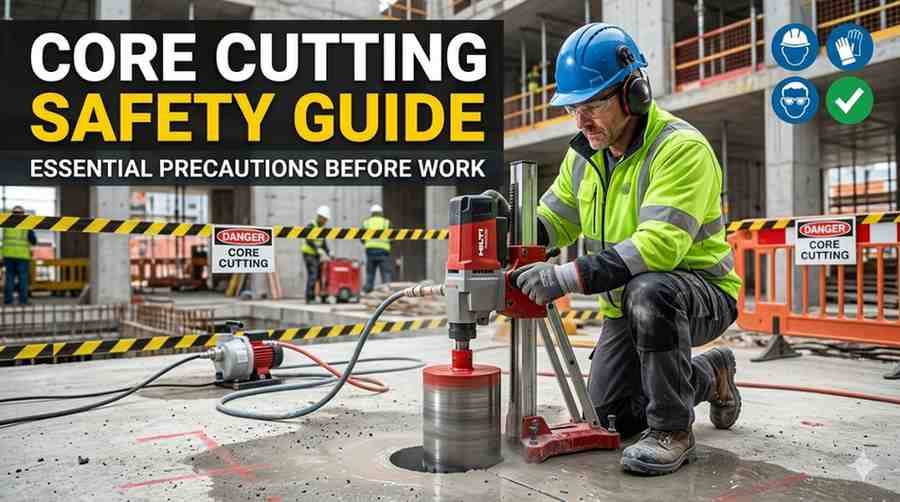
Core cutting looks simple from the outside — a machine, a diamond bit, and a clean round hole. But behind every smooth cut is a job site where things can go seriously wrong if safety isn't taken seriously. A drill bit hitting a live electrical conduit, a core cutting machine striking a rebar at the wrong angle, or dust filling an unventilated room can turn a routine job into an accident in seconds.
This guide walks through the essential precautions every property owner, site supervisor, and contractor should follow before any core cutting, wall cutting, or slab cutting work begins.
Why Core Cutting Safety Cannot Be Skipped
Core cutting involves high-speed diamond drilling through concrete, RCC, brick, and stone — materials that often hide electrical wiring, plumbing lines, gas pipes, or structural rebar. Unlike simple wall drilling for a screw or nail, core cutting machines apply continuous rotational force and water cooling over several minutes, which means any hidden hazard gets full exposure to the drill.
Skipping safety steps can lead to:
- Electrical shock from cutting into live wiring hidden inside walls
- Structural cracks or instability from cutting into load-bearing rebar without checking
- Water damage from striking concealed plumbing lines
- Respiratory issues from prolonged exposure to concrete dust
- Physical injury from machine kickback, electric shock, or falling debris
- Property damage to tiles, flooring, or adjoining fixtures
This is exactly why professional, verified core cutting contractors follow a structured safety process — not just for the worker's protection, but for the safety of everyone in the building.
Pre-Work Safety Checklist: Before the Drill Even Starts
1. Inspect the Structure First
Before marking any cutting point, a qualified contractor should check wall or slab thickness, material type (RCC, brick, block, or stone), and whether the surface is load-bearing. Cutting into a structural beam or load-bearing wall without engineering clearance can compromise the entire structure.
2. Locate Hidden Utilities
Electrical conduits, plumbing pipes, and gas lines are often routed inside walls and slabs with no visible marking. Using a rebar/utility detector before drilling is non-negotiable for any professional job — especially in kitchens, bathrooms, and walls near electrical panels.
3. Confirm the Exact Cutting Diameter and Location
Re-confirm the hole size and position against the actual requirement (AC pipe, exhaust duct, plumbing line, etc.) before cutting. Errors here are permanent and expensive to fix.
4. Check Machine and Equipment Condition
The core cutting machine, diamond bit, water supply line, and power cables should all be inspected for wear, damage, or loose fittings before every use. A worn diamond bit can wobble during cutting, increasing the risk of kickback.
5. Ensure Proper Power Supply Safety
Core cutting machines run on electricity near water (used for cooling), which is a serious shock risk if not handled correctly. RCD/ELCB-protected power sockets are essential, and cables should never run through standing water.
Safety Precautions During Core Cutting Work
- Wear proper PPE — safety goggles, ear protection, dust masks, and non-slip gloves are mandatory for the operator at all times.
- Use wet drilling, not dry drilling, wherever possible — water cooling reduces dust significantly and protects both lungs and the diamond bit.
- Secure the machine properly — core cutting rigs should be anchored or held firmly to prevent slippage during drilling, especially on vertical walls.
- Keep the work area clear — bystanders, especially children, should stay away from the cutting zone at all times.
- Ventilate the space — open windows or use exhaust fans to clear dust and fumes, particularly in closed rooms or bathrooms.
- Never rush through RCC sections — if the bit hits embedded rebar, the contractor should pause, reassess, and adjust rather than force through it.
- Protect surrounding surfaces — tiles, flooring, and furniture near the cutting zone should be covered to prevent dust and debris damage.
Post-Cutting Safety Checks
Once the hole is cut, the job isn't done until:
- Edges are checked for sharpness or cracking that could weaken the opening over time.
- Debris and slurry are fully cleaned up, including any dust settled on nearby surfaces.
- Cut sections are inspected to confirm no exposed rebar, wiring, or plumbing was damaged.
- The opening is sealed or capped temporarily if the pipe, duct, or fan isn't being fitted immediately, to prevent dust, pests, or water entry.
Core Cutting vs Wall Cutting vs Slab Cutting — Safety Differences
| Service | Primary Safety Risk | Key Precaution |
|---|---|---|
| Core Cutting Service | Hidden rebar/wiring in small-diameter holes | Utility detection before drilling |
| Wall Cutting Service | Larger surface area, heavier vibration | Secure wall saw, check load-bearing status |
| Slab Cutting Service | Risk to structural integrity of floor/roof | Engineering check before cutting |
| Beam Cutting Service | High structural risk — beams are load-bearing | Mandatory structural engineer approval |
Why Hiring Verified Contractors Matters for Safety
DIY core cutting or hiring an unverified, low-cost operator is one of the most common causes of on-site accidents and structural damage in India. A trained, insured, and experienced contractor brings:
- Proper utility detection equipment
- Trained handling of core cutting machinery
- Knowledge of which walls/slabs are safe to cut without engineering approval
- PPE compliance and dust control practices
- Accountability if something goes wrong on-site
Every contractor listed on Core Cutting India goes through a verification process — covering business registration, work history, and customer ratings — so you're not leaving safety to chance. Browse verified contractors in your city, or check our listings in Mumbai, Bengaluru, Hyderabad, and Pune.
If your project also involves an exhaust fan installation or a door cutting service, the same safety principles apply — hidden utilities and structural checks come first, every time.
📞 Get a Safety-First Core Cutting Contractor — Talk to Us Now
Don't let an untrained operator near your walls, slabs, or beams. Book a verified, safety-compliant contractor through Core Cutting India and avoid the risks of doing it the wrong way.
Call us now: 7009679903 WhatsApp us: Chat on WhatsApp Email us: [email protected]
Get a free quote, ask about safety procedures upfront, and book a contractor who's already verified.
Frequently Asked Questions
1. What is the biggest safety risk in core cutting? The biggest risk is striking hidden electrical wiring, plumbing lines, or structural rebar inside the wall or slab. This is why utility detection before drilling is one of the most important safety steps.
2. Is core cutting dangerous for people living in the house during the work? Core cutting is generally safe for occupants if proper precautions are followed — keeping people away from the immediate work area, ventilating the space, and covering nearby furniture and surfaces. Professional contractors manage this as standard practice.
3. Do core cutting workers need to wear safety equipment? Yes. Safety goggles, ear protection, dust masks, and non-slip gloves are essential for anyone operating a core cutting machine, given the noise, dust, and vibration involved.
4. Can core cutting damage the structural strength of a building? It can, if done incorrectly — especially on load-bearing walls, beams, or slabs without proper assessment. A trained contractor checks whether a section is structural before cutting and avoids or limits cuts in critical areas.
5. Is wet drilling safer than dry drilling? Yes. Wet (water-cooled) drilling significantly reduces dust generation compared to dry drilling, lowering respiratory risks and keeping the diamond bit cooler, which also reduces equipment failure risk.
6. How do contractors avoid cutting into hidden wires or pipes? Professional contractors use rebar and utility detection devices to scan the wall or slab before marking the cutting point, helping avoid live wiring, gas lines, and plumbing.
7. What should I check before hiring a core cutting contractor? Check for verified business registration, past customer reviews, use of proper safety equipment, and whether they bring utility detection tools to the site. All of this is visible upfront for contractors listed on Core Cutting India.
8. Who is responsible if something goes wrong during core cutting? A verified, insured contractor takes responsibility for safe execution and any accidental damage caused during the work, which is why hiring through a verified platform is safer than hiring an unknown operator directly.
Related Services and Resources
- Core Cutting Service — verified contractors for RCC and concrete drilling
- Wall Cutting Service — safe rectangular openings for doors, windows, ducts
- Slab Cutting Service — floor and roof cutting with structural checks
- Beam Cutting Service — structural modifications by trained specialists
- Rate Calculator — get an instant cost estimate for your project
- List Your Core Cutting Business Free — for safety-compliant contractors looking for more enquiries
Looking for a safety-first, verified core cutting contractor? Visit Core Cutting India or call 7009679903 today.