
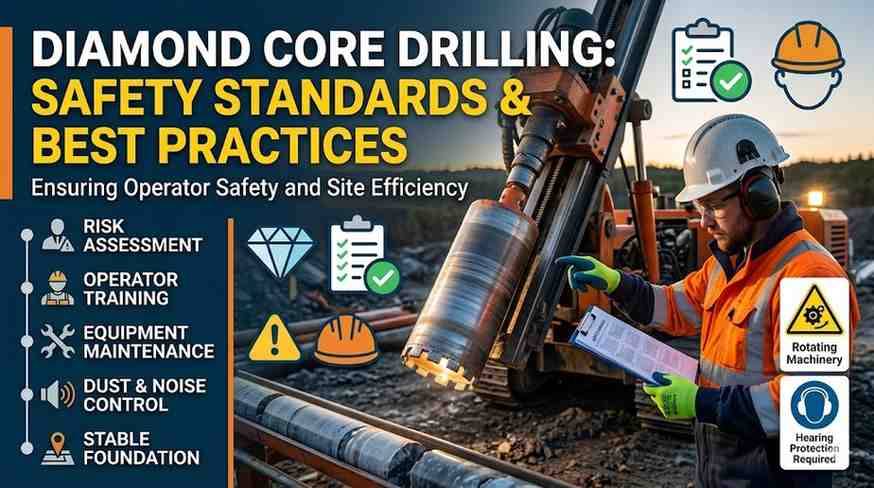
Diamond core drilling is one of the most precise and widely used methods for cutting clean, round holes through concrete, masonry, and reinforced structures. From plumbing and electrical conduit installations to HVAC ducting and structural inspections, this technique is a backbone of modern construction and renovation work. But because it involves high-speed rotating diamond bits, water management, and heavy equipment, diamond core drilling also carries real risks if safety protocols are ignored.
At Core Cutting India, safety isn't an afterthought — it's built into every stage of our core drilling and concrete cutting projects. In this guide, we break down the essential safety standards and field-tested best practices that every contractor, site supervisor, and drilling operator should follow.
Why Safety Matters in Diamond Core Drilling
Diamond core drilling rigs operate at high RPM, generate significant torque, and often work close to live utilities, structural rebar, or pressurized water and gas lines. A single oversight — a loose anchor, an unchecked cable, or missing PPE — can lead to serious injury, equipment damage, or costly project delays. Following recognized safety standards protects your crew, your client's property, and your business reputation.
Pre-Drilling Safety Standards
1. Conduct a Site and Utility Survey
Before any drilling begins, the work area must be scanned using GPR (Ground Penetrating Radar) or rebar/cable detectors. This identifies embedded electrical wiring, plumbing, post-tension cables, and structural rebar that could be damaged during drilling — a step that prevents both safety hazards and structural failures.
2. Risk Assessment and Method Statement
Every job should begin with a documented Risk Assessment and Method Statement (RAMS). This outlines the drilling sequence, equipment to be used, anchoring method, water management plan, and emergency procedures specific to that site.
3. Secure Permits and Approvals
For structural penetrations, especially in load-bearing walls, slabs, or columns, a structural engineer's approval is mandatory. Unauthorized drilling into critical structural elements can compromise building integrity.
Essential Personal Protective Equipment (PPE)
Operators must never run a diamond core rig without complete PPE, including:
- Safety helmet and high-visibility vest
- Safety goggles or a full face shield to guard against water spray and debris
- Hearing protection, since core drills generate continuous high-decibel noise
- Cut-resistant gloves rated for handling diamond bits and rigs
- Steel-toe safety boots with slip resistance, particularly important on wet drilling sites
- Respiratory protection (N95 or better) when dry-cutting or working in poorly ventilated areas
Equipment Safety Checks
Inspect the Rig and Bit Before Every Use
Check the drill motor, stand, and anchoring bolts for wear or damage. A worn anchor or cracked baseplate is one of the leading causes of rig instability during operation.
Verify Electrical Safety
All core drilling rigs should be connected through a Residual Current Device (RCD) or Ground Fault Circuit Interrupter (GFCI), especially since wet core drilling involves constant water flow near electrical components. Cables must be inspected for cuts or fraying and kept clear of the cutting path.
Secure the Rig Properly
Whether using a vacuum base, mechanical anchor, or threaded rod, the rig must be tested for stability before drilling begins. An improperly anchored rig can shift under torque, causing the bit to bind or the rig to tip.
Best Practices During Drilling Operations
- Use wet drilling whenever possible. Water cooling reduces dust, extends diamond bit life, and prevents overheating, which lowers the risk of bit jamming or kickback.
- Maintain steady, controlled feed pressure. Forcing the bit too fast increases the chance of binding, vibration, and bit damage.
- Manage wastewater responsibly. Use a vacuum slurry system or containment trays to prevent slippery surfaces and environmental contamination.
- Keep the work zone barricaded. Mark the drilling zone with cones, tape, or barriers so unauthorized personnel stay clear of rotating equipment and water spray.
- Never leave a running rig unattended. Operators should stay within reach of the emergency stop at all times.
- Watch for rebar resistance. If the bit unexpectedly slows or vibrates heavily, stop immediately and reassess — this often indicates contact with reinforcement steel.
- Mind core removal. Heavy concrete cores can weigh significantly once extracted; use proper lifting techniques or core-pulling tools to avoid back injuries.
Post-Drilling Safety Practices
After completing the hole, the area should be cleaned of slurry and debris, edges should be checked for sharp protrusions, and any exposed rebar should be capped or flagged. If the penetration affects a structural or fire-rated element, appropriate sealing or fireproofing materials must be applied to restore compliance.
Training and Certification
Operators should be trained and certified in diamond core drilling techniques, electrical safety around wet environments, and manual handling. Ongoing toolbox talks before each shift reinforce hazard awareness and keep safety protocols fresh on every job site. For larger commercial and industrial projects, working with an experienced, certified team like Core Cutting India ensures every job meets both safety and quality standards.
Common Mistakes to Avoid
- Skipping the utility scan to save time
- Using a damaged or mismatched diamond bit for the material
- Drilling without securing the rig properly
- Ignoring water supply checks, leading to bit overheating
- Failing to communicate with other trades working nearby
Final Thoughts
Diamond core drilling delivers clean, precise results — but only when safety is treated as a non-negotiable part of the process. From pre-drilling utility surveys to proper PPE, equipment checks, and disciplined drilling technique, every step plays a role in protecting your crew and your project timeline.
If you need professional, safety-certified diamond core drilling or concrete cutting services for your residential, commercial, or industrial project, our team at Core Cutting India is ready to help.
Get a Free Core Drilling Quote Today
Don't compromise on safety or precision. Whether it's a single core hole or a large-scale concrete cutting project, our certified team is just a call away.
📞 Call or WhatsApp us now: 7009679903 📧 Email us: [email protected] 🌐 Visit: https://corecuttingindia.com/
Get a free site assessment and quote within 24 hours.
Frequently Asked Questions (FAQs)
Q1. What is diamond core drilling used for? Diamond core drilling is used to create precise, round holes in concrete, brick, and stone for plumbing pipes, electrical conduits, HVAC ducts, structural testing, and anchor bolt installations.
Q2. Is diamond core drilling safe for load-bearing walls? It can be, but only after a structural engineer's assessment and a proper utility/rebar scan. Drilling into load-bearing elements without approval can compromise structural integrity.
Q3. What PPE is required for core drilling operators? At minimum, operators need a safety helmet, eye and face protection, hearing protection, cut-resistant gloves, steel-toe boots, and respiratory protection when dry-cutting.
Q4. Why is wet drilling preferred over dry drilling? Wet drilling cools the diamond bit, controls dust, and reduces the risk of overheating and bit failure, making it both safer and more efficient for most concrete cutting jobs.
Q5. How do I know if there's rebar or wiring inside the wall before drilling? Professional contractors use GPR scanning or electronic rebar/cable detectors to map embedded utilities and reinforcement before any drilling begins.
Q6. How can I book a diamond core drilling service? You can call or WhatsApp us at 7009679903, email [email protected], or visit corecuttingindia.com to request a free quote.
Related reading: Explore more concrete cutting and drilling services, equipment, and project case studies at Core Cutting India.