
Most homeowners meet core cutting once, maybe twice, in a lifetime. It usually comes with a renovation, a new AC or a kitchen upgrade, and by then everyone around you is busy. The plumber says "just a small hole." The designer says "the contractor will handle it." Nobody explains what you actually need to know.
So here it is. These are fifteen things we wish every homeowner understood before the machine arrives: how it works, what it costs, what can go wrong, and how to make it go right. Each point is short, practical and written in plain language. Read the whole list once, then use it as a reference.
Have questions before you book core cutting? Ask us first. 📞 Call: 7009679903 | 💬 WhatsApp: Ask a quick question | ✉️ info@corecuttingindia.com
1. Core Cutting Is Wet Drilling, Not Hammering
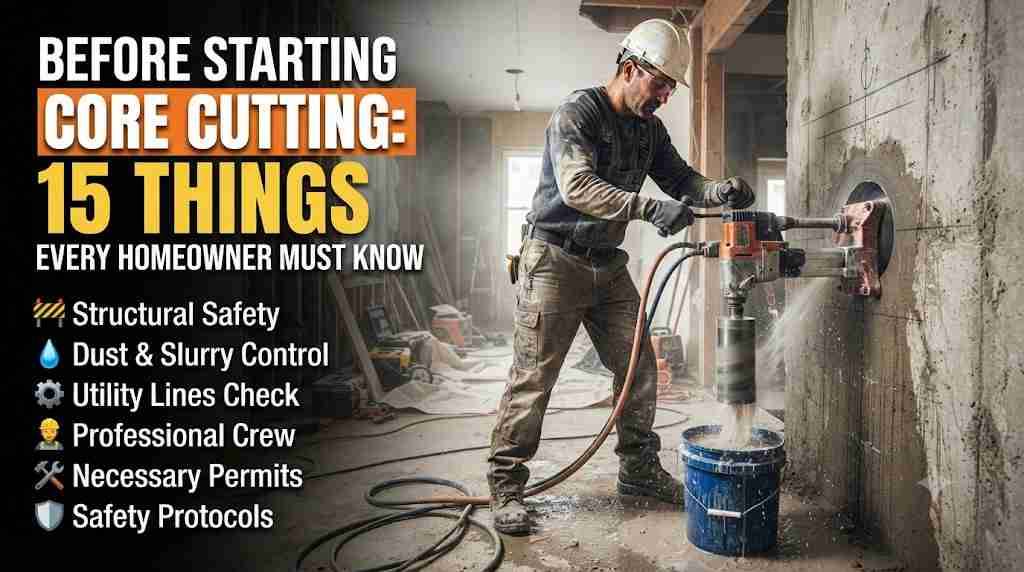
A core cutting machine spins a hollow bit set with diamond segments, and water is fed to the cutting edge. The result is a clean, round hole, with far less cracking than a hammer drill gives. The solid piece removed is called the core.
Why it matters: it explains why you'll need water on site, and why the process creates slurry. For a fuller explanation, see our core cutting service page.
2. It Creates Slurry, So Plan for a Little Mess
Water mixed with concrete powder becomes a grey paste. A good crew catches most of it with trays or a wet vacuum, but a little will escape. Cover floors, move furniture, and keep a cloth ready.
Why it matters: slurry stains paint and wood if left to dry.
3. Do It Before the Interiors, If You Can
Core cutting is cleanest in a bare or lightly finished room. Doing it before false ceiling, tiles, carpentry and paint saves you protection costs and cleanup. If your space is already finished, it's still possible with the right protection. See our guide on concrete cutting in finished buildings.
Why it matters: timing changes both the cost and the risk.
4. Your Walls Hide Things
Concrete and brick walls can hide steel bars, electrical conduits and water pipes. Older homes often have wiring that follows no drawing.
Why it matters: hitting a hidden service is the biggest avoidable risk. Ask your contractor how they check before drilling. For more on concrete itself, see what you need before concrete core cutting.
5. Not Every Wall Is Safe to Cut
Beams, columns and some walls carry the weight of your building. Cutting them without a qualified structural engineer's approval isn't safe. In some commercial or large-span slabs, tensioned steel cables may be present, and cutting one can be dangerous.
Why it matters: this is the one area where "just try it" is never acceptable. See our note on beam cutting.
6. Round Holes and Large Openings Are Different Jobs
Core cutting makes round holes for pipes, ducts and cables. Larger straight-edged openings, such as doorways, windows and floor openings, need wall cutting or slab cutting, usually with more planning and structural advice. For a new entrance, see door cutting.
Why it matters: the wrong service means the wrong quote and the wrong preparation. Our wall and slab cutting pre-work checklist covers larger openings in depth.
7. The Hole Position Is Permanent
Once cut, you can't move a hole. You can only fill it and cut another. So decide the final position of your AC, chimney or drain before drilling.
Why it matters: changing your mind after marking costs time and money. Mark with chalk or tape, photograph it, and check the other side of the wall.
8. The Other Side of the Wall Matters
A hole that looks perfect indoors might exit behind a cupboard, a neighbour's window or a drain pipe. Outside-wall holes can also affect your building's appearance and a neighbour's property below.
Why it matters: you can't see problems on the far side until it's too late. Always check.
9. You Need to Provide Power and Water
The machine is electric and the process is wet. You'll usually need a working power point near the work area and a water source within reach, while the contractor brings cables, hoses and equipment. If power cuts are common, tell the contractor in advance.
Why it matters: missing power or water is one of the most common reasons for delays. See our guide on core cutting requirements.
10. The Contractor Normally Brings the Equipment
You don't need to buy or rent anything. A professional crew brings the machine, stand, bits, accessories and protective gear. Confirm this in the quote, along with whether scanning, scaffolding and cleanup are included.
Why it matters: unclear inclusions are where surprise charges come from.
11. Permissions Can Stop a Job
- Apartments: society approval and permitted working hours
- Rented homes: the landlord's written consent
- Structural or outside-wall holes: engineer or building approvals
- Neighbours: a courtesy notice helps
Why it matters: a stopped job wastes a booking and delays your whole project.
12. Price Depends on More Than Hole Count
Cost depends on hole diameter, wall or slab thickness, material, steel density, height, access, number of holes and your city. Larger, thicker, higher or harder-to-reach holes cost more, and batching holes into one visit is usually more economical.
Use the Core Cutting Rate Calculator for a starting estimate. Our platform's general guide suggests roughly ₹150 to ₹800 per hole, though some jobs fall outside that range. Always confirm the final figure after the contractor has seen photos.
Why it matters: the cheapest quote isn't always the cheapest job. Ask what's included.
13. Photos Make Quotes Better
A few photos can replace several phone calls.
- A wide shot of the room
- A close-up of the marked hole
- The other side of the wall, if accessible
- The access route: stairs, lift, lane
Why it matters: contractors can quote more accurately and bring the right equipment when they've seen your space.
14. Be Present, or Send Someone Reliable
Someone should be on site to approve hole positions, answer questions and inspect the finished work. Keep children, elderly family members and pets away from the work area, and anyone with breathing problems well away from dust and noise.
Why it matters: quick decisions on the day prevent mistakes.
15. The Job Isn't Finished When the Drilling Stops
Before the crew leaves:
- Inspect each hole for position, diameter, edge and slope
- Confirm slurry and debris are cleared
- Photograph the openings for your plumber, electrician or AC installer
Afterward, sleeve pipes, seal gaps against water and pests, and waterproof outside or wet-area openings.
Why it matters: a poorly sealed opening can leak, let in pests or cause damp later.
Quick Recap: The 15 Points in One Glance
- Core cutting is wet diamond drilling
- Expect some slurry
- Cut before interiors if possible
- Walls hide steel, pipes and wiring
- Beams, columns and certain slabs need an engineer
- Round holes and large openings are different jobs
- Hole positions are permanent
- Check the other side of the wall
- Arrange power and water
- The contractor brings the equipment
- Get permissions early
- Price depends on many factors
- Photos improve quotes
- Be present on the day
- Inspect, sleeve and seal
How to Choose a Contractor
Look for one who asks about wall type, hole size, height and access before quoting. They should explain how they check for hidden steel and wiring, how they control slurry, and what the price includes. Core Cutting India lists contractors with ratings and reviews on each profile, so you can compare before you call. Start from the homepage and choose your city. For a full hiring walkthrough, see what to arrange before hiring a core cutting service.
Local Note for Punjab Homeowners
Punjab homes range from independent kothis to builder floors and apartments, and many have been extended and repaired over the years. In older houses, thick or patched walls and undocumented wiring make points 4 and 5 especially important. In dense parts of Ludhiana, Amritsar and Jalandhar, narrow lanes, limited parking and no-lift buildings affect how equipment arrives, so mention your locality, floor and building age when you call.
To compare contractors, ratings and reviews near you, see our Punjab core cutting service page. For Jalandhar kitchens and bathrooms, our guides on chimney hole cutting and exhaust fan hole cutting are useful starting points.
Frequently Asked Questions
What should a homeowner know before core cutting?
Know that it's wet drilling that creates slurry, that walls can hide steel and pipes, that beams and columns need an engineer, that hole positions are permanent, and that you'll usually provide power and water while the contractor brings the equipment.
How long does core cutting take?
It depends on hole size, material, thickness and access. Small holes in plain walls can be quick, while thick reinforced concrete takes longer. Ask your contractor for an estimate based on your photos.
Does core cutting make a lot of mess?
Wet cutting keeps dust low, but some slurry is unavoidable. Covering floors, moving furniture and cleaning promptly keeps it manageable.
Is core cutting safe for my home?
Yes, when done by trained crews who check for hidden services and structural elements, use protective equipment and manage water and electricity properly.
How much does core cutting cost?
It depends on diameter, thickness, material, access and city. Our general range is about ₹150 to ₹800 per hole. Use the Rate Calculator and confirm with your contractor.
Do I need permission for core cutting?
Often yes. Apartments need society approval, rented homes need the landlord's written consent, and structural openings need an engineer's approval.
How do I book core cutting?
Call or WhatsApp 7009679903 with your city, hole sizes, wall type and photos for guidance and a quote.
Conclusion: Know These 15, and You're Ahead of Most
You don't need to become an expert to get core cutting right. You just need to know what to expect: how the method works, what to arrange, where the risks are and what a good contractor does. Keep this list handy, share your photos early and ask plenty of questions. A well-informed homeowner gets a cleaner, safer and cheaper job every time.
📞 Call or 💬 WhatsApp: 7009679903
✉️ Email: info@corecuttingindia.com 🌐 Website: corecuttingindia.com 🧮 Instant estimate: Rate Calculator