
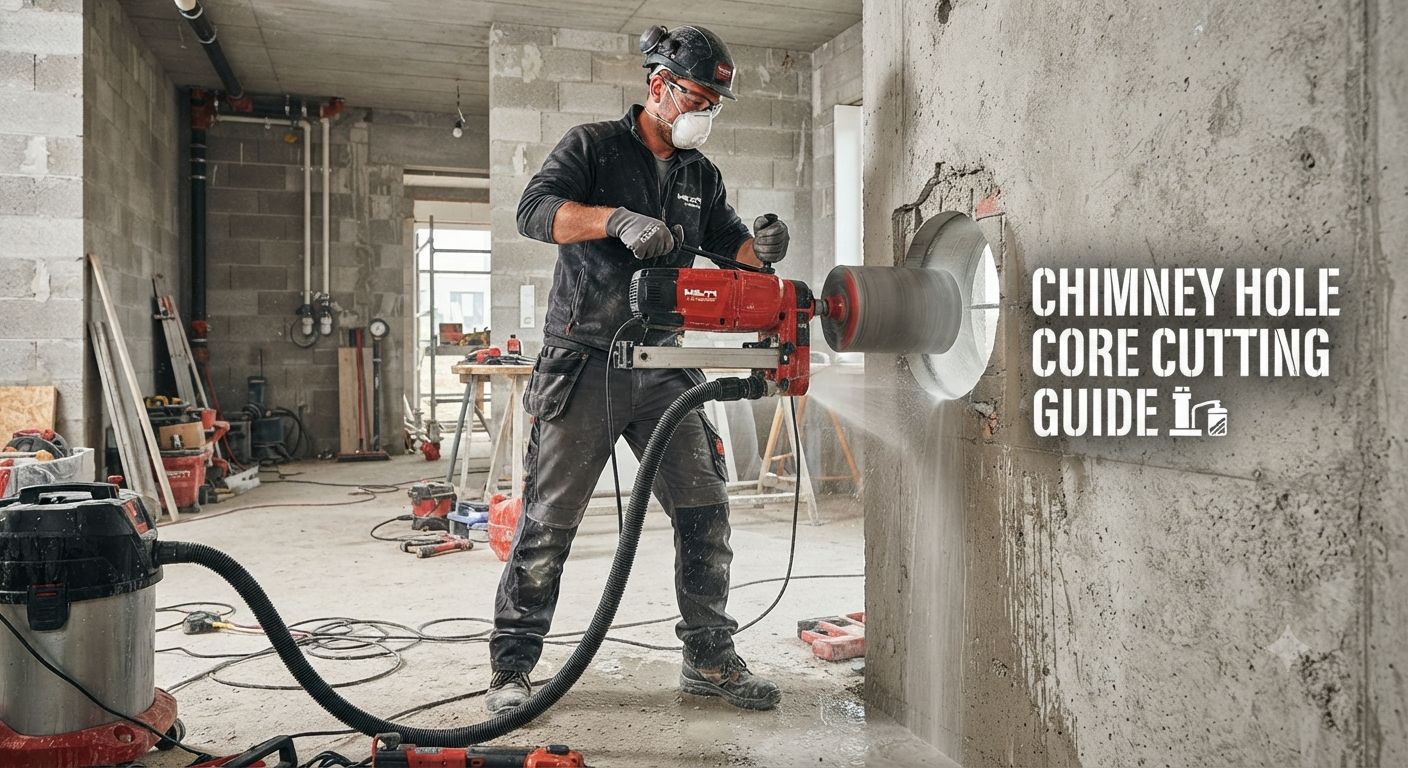
Installing a modern kitchen chimney is a major step toward a cleaner, healthier cooking environment. However, the most critical part of the installation process often lies in the infrastructure—specifically, creating a precise, clean exhaust path. If you are struggling with how to vent your kitchen chimney through a thick concrete wall, Core Cutting is the professional solution you need.
What is Chimney Hole, Core Cutting?
Chimney hole core cutting is a specialized construction technique used to create perfectly circular openings in hard surfaces like concrete walls, RCC (Reinforced Cement Concrete) beams, or masonry. Unlike traditional methods like hammering or chiseling—which can cause structural cracks and messy, uneven holes—core cutting uses a diamond-tipped cylindrical drill bit.
This process is highly surgical. It allows for a clean passage for your chimney’s exhaust duct, ensuring a snug fit that makes sealing and weatherproofing much easier.
Why Choose Core Cutting Over Traditional Methods?
Many homeowners initially consider the "sloppy way" of drilling multiple small holes and chipping out the concrete between them. However, for a chimney installation, this is rarely recommended for several reasons.
1. Structural Integrity
Hammering and manual chiseling can induce micro-cracks in your wall or beam. If you accidentally strike rebar, you can weaken the structural support of your home. Core drilling is vibration-free and precise, preserving the integrity of the surrounding wall.
2. Precision and Fit
Chimney ducts require a consistent diameter (usually 6 to 8 inches) to maintain proper airflow. A jagged, hand-chipped hole makes it difficult to attach the duct, leading to air leaks and reduced suction efficiency. Core cutting produces a smooth, circular hole that fits the duct perfectly.
3. Dust and Noise Control
Professional core cutting machines often use a water-cooling system that keeps dust to a minimum and reduces noise significantly compared to traditional percussion drilling.
The Core Cutting Process: What to Expect
When you hire a professional service like [email protected], the process is systematic and efficient:
-
Site Assessment: Technicians identify the best location for the exhaust, ensuring the path is clear of internal electrical conduits or hidden plumbing.
-
Marking: The center of the hole is marked with precision to align with the chimney’s exhaust outlet.
-
Setup: The core drilling machine is securely anchored to the wall. This ensures the drill remains stable throughout the process.
-
Drilling: Using a diamond-tipped bit and a water supply for cooling, the machine steadily cuts through the concrete. The water also helps flush out the debris.
-
Extraction: The "core"—the cylindrical piece of concrete—is removed, leaving behind a smooth, clean opening.
-
Finishing: The edges are cleaned, and the duct is ready for installation.
Important Safety Considerations
Core cutting is heavy-duty work. Whether you are supervising the task or hiring pros, keep these safety points in mind:
-
Scan the Wall: Always check for rebar or utility lines (electrical/water) before cutting. Using a scanner or GPR (Ground Penetrating Radar) is a best practice for high-rise apartments.
-
Water Management: Excessive water can cause a mess. Professionals use a slurry collection method to keep your kitchen floors clean.
-
Professional Protective Equipment (PPE): Safety goggles, ear protection, and dust masks are mandatory for anyone near the drilling site.
-
Permits: If you live in a high-rise, always verify if your building management requires permission to cut through external walls or structural members.
Related Keywords
-
RCC wall cutting for kitchen exhaust
-
Concrete core drilling services
-
Diamond bit concrete cutting
-
Professional duct hole drilling
-
Kitchen chimney vent installation service
-
Concrete slab core cutting
People Also Ask (PAA)
Q: Can I do chimney hole core cutting as a DIY project?
A: While possible, it is not recommended for thick concrete or RCC walls. Renting professional-grade equipment is expensive, and one mistake—like hitting a steel reinforcement bar—can cause significant damage. It is safer and often more cost-effective to call an expert.
Q: How long does it take to cut a chimney hole?
A: Depending on the thickness of the wall and the hardness of the concrete, a standard chimney hole (usually 6-8 inches in diameter) typically takes 30 to 60 minutes for a skilled technician.
Q: Will core cutting damage my wall tiles?
A: When done by a professional, core cutting is precise and vibration-free, which keeps the surrounding tiles intact and prevents chipping.
Why Choose [email protected]?
At [email protected], we specialize in precision core cutting services. We understand that a chimney is a vital part of your home’s air quality system. Our team uses advanced diamond-tipped machinery to ensure your exhaust hole is perfectly positioned, cleanly cut, and structurally sound.
Don’t risk your walls with amateur hammering. Ensure your kitchen chimney is installed perfectly the first time. Contact [email protected] today for a professional, hassle-free service experience.
For further assistance with your installation, feel free to reach out to our team at [email protected] for a consultation!
What part of your chimney installation are you currently finding most challenging—the duct routing or the wall drilling?