
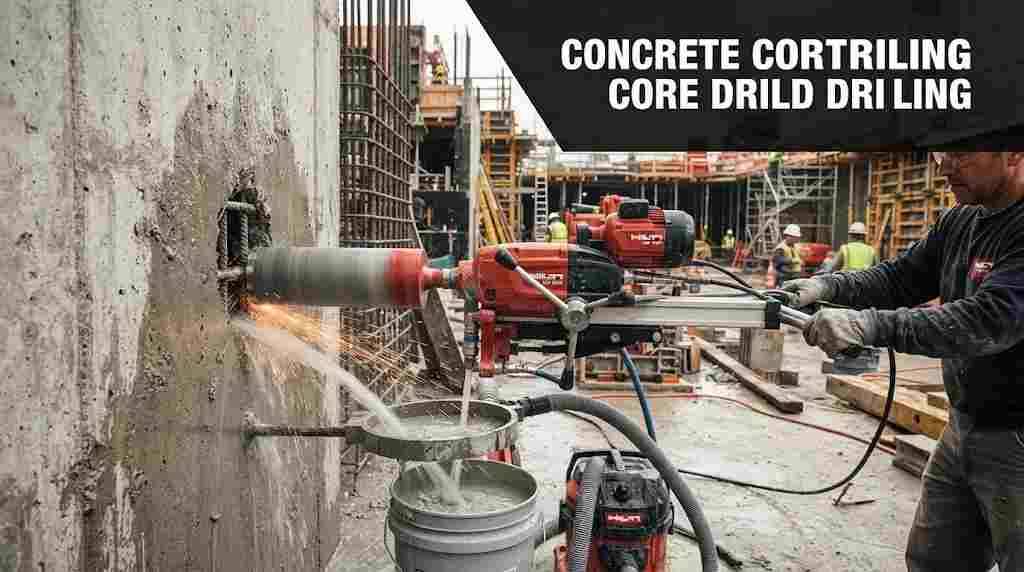
A core drilling job has a rhythm. First you look, then you set up, then you cut, then you clean. Teams that respect that order finish quickly and leave nothing behind but a neat, round hole. Teams that jump straight to the cutting stage are the ones who hit rebar, flood a bedroom with slurry or crack the edge of a fresh tile.
This guide follows the job in the order it actually happens on site: inspection, setup, drilling and safety. Whether you are a homeowner, a site engineer or a facility manager, it will help you understand what a careful crew does and why each step matters.
📞 Need a team that follows this process? Call or WhatsApp 7009679903 for a quick quote and site discussion.
The Four Stages at a Glance
| Stage | What happens | Why it matters |
|---|---|---|
| 1. Pre-work inspection | Check structure, reinforcement, services and surroundings | Prevents damage and surprises |
| 2. Machine setup | Anchor the rig, connect power and water, fit the bit | Gives a straight, stable cut |
| 3. Drilling | Controlled cutting with water cooling | Clean edges, longer bit life |
| 4. Safety and cleanup | Protect people, remove the core, clean the site | Leaves the space safe and tidy |
Our core cutting service follows this same sequence on every job.
Stage 1: Pre-Work Inspection
Inspection is where experienced operators spend the most thought. The drilling itself is the easy part.
Understand the material and thickness
Is it RCC, plain concrete, brick, block or stone? How thick is it? A thin partition and a thick slab call for different bits, different time and different pricing. If the surface is old, check for weak patches, cracks or crumbling edges.
Look for reinforcement and hidden services
Reinforced concrete contains steel, and walls or slabs may carry electrical conduits, water pipes or gas lines. Before marking the final spot:
- Check available drawings for electrical, plumbing and structure.
- Inspect the opposite side of the wall for bathrooms, kitchens, switchboards or meters.
- Use a scanner where the risk is real, particularly in older buildings.
- Isolate power and water near the zone if there is any doubt.
If a hole falls near a beam, column or slab edge, pause and ask for a structural opinion. We explain this further in our article on important checks before making openings in concrete slabs.
Confirm the hole details
Agree on diameter, position, height from finished floor, and angle or slope with whoever will use the opening, such as the AC installer, plumber or electrician. A perfectly cut hole in the wrong place is still a mistake. For planning ideas by installation type, see our guide on planning concrete drilling for AC, chimney, exhaust fan and plumbing.
Inspect the surroundings
Note furniture, electronics, floor finishes, nearby people, ventilation and the area on the other side of the opening. If the drill will break through to a balcony, facade or neighbouring space, plan for that too.
Check the basics: power, water, access
The wider site checklist is covered in site conditions to check before diamond core drilling. In short, confirm a working socket, a water source, safe access and the permissions needed.
Stage 2: Machine Setup
A stable setup is what separates a straight hole from a crooked one.
Choose the right machine and bit
Handheld rigs can work for small, light jobs. For most RCC drilling, a stand-mounted rig is preferred because it holds the bit perpendicular to the surface. Heavy slabs and large diameters may need a more powerful or hydraulic rig.
Select a diamond bit that matches the diameter, with sharp, healthy segments. A glazed or worn bit overheats and cuts poorly. If you want to understand what a proper crew carries, read what equipment and site arrangements are required for professional core cutting.
Mark and align
Mark the centre point clearly. Many operators also mark the outline of the hole. Make sure the stand is aligned so the bit enters the surface at the intended angle, particularly for drains and AC pipes where slope matters.
Anchor the stand
The rig must not shift while cutting. Operators typically use:
- Anchor bolts drilled into sound concrete behind the stand.
- A vacuum base on suitable, clean, flat surfaces.
- Bracing or supports for overhead or awkward positions.
Check that the anchor sits in solid material, not just in plaster or loose finishing.
Connect power safely
Use a heavy-duty cable of suitable length and rating. Keep connections off wet floors, and use a residual-current device where possible. Avoid overloaded plug boards.
Connect water and slurry control
Set up the water feed so it flows steadily to the bit. Place a slurry ring or vacuum around the hole, lay plastic sheets and tape the edges. This is the step that keeps your floor and furniture clean.
Do a quick pre-start check
Before pressing the start button, confirm:
- The bit is tight and undamaged.
- Water flow is steady.
- The stand is firmly anchored.
- The area is clear of people and obstacles.
- The operator is wearing protective gear.
Stage 3: Drilling Technique
With inspection and setup done, the cutting itself is controlled and calm.
Start gently
The operator begins at low pressure so the bit can "seat" in the surface. Rushing here makes the bit wander and chips the edges.
Maintain steady feed and water
Once the bit has bitten in, the feed should be steady, neither forced nor too light. Water must keep flowing. If the slurry turns thick or the bit slows, the operator eases off and checks flow.
Handle reinforcement carefully
If the bit meets steel, a good operator will recognise the change in sound and resistance. They stop, assess, and either continue with suitable settings or reposition, depending on structural advice. Forcing the bit through steel damages both the bit and, potentially, the structure.
Break through cleanly
As the bit nears the back face, the operator reduces pressure to avoid chipping or blow-out. If the hole opens into a balcony or outside face, they confirm the area below is clear.
Remove the core safely
The cylindrical concrete core can be heavy and may fall as the bit breaks through. It should be supported or removed in a controlled way, especially in overhead work.
For rectangular openings such as doors, windows or large ducts, the method changes. That is typically handled through wall cutting or slab cutting rather than a round bit.
Stage 4: Safety Measures That Should Never Be Skipped
Safety is not a separate step. It runs through all the others.
Personal protection
Operators should wear helmets, safety glasses, gloves, hearing protection and non-slip footwear. For dusty or enclosed work, a mask is sensible.
Electrical safety
Water and electricity share the same space in wet drilling, so cables, joints and sockets need care. Keep cables off the floor where water collects, and use protective devices.
Area control
Clear the zone of people and pets. Place barricade tape or cones below any outside opening. Do not allow anyone to stand directly under a hole that will break through at height.
Working at height
Use stable ladders or scaffolding and make sure the operator is not overreaching while holding a running rig.
Dust, noise and slurry
Wet drilling suppresses dust, but slurry must be contained and cleaned. Noise can be significant in apartments, so inform neighbours and respect permitted hours.
Emergency readiness
Know where the main switch and water shut-off are. Keep a basic first-aid kit nearby, and keep a phone available.
Cleanup and handover
Before leaving, the crew should remove the core, wipe slurry, vacuum debris and show you the finished hole. Check the edges, the position and the surrounding surface before signing off.
Common Mistakes at Each Stage
- Inspection: skipping the scan, ignoring what is on the other side of the wall.
- Setup: weak anchoring, a worn bit, no slurry control.
- Drilling: forcing the bit, running without enough water, ignoring changes in resistance.
- Safety: wet cables, no barricade below openings, no protective gear.
If you spot any of these on your site, ask the team to pause and fix them. A responsible crew will welcome the question.
What Affects the Cost of Core Drilling
Cost follows effort. Larger diameters, thicker material, heavy reinforcement, work at height and difficult access all raise the price, as do slurry containment and cleanup requirements. On our platform, indicative rates for common jobs usually fall between ₹150 and ₹800 per hole, though complex projects may exceed that range.
To get a realistic starting point, use the core cutting rate calculator and compare it against the quotes you receive.
Punjab Note: Applying This Guide on Local Sites
Across Punjab, the sequence above plays out in different ways depending on where you are. In older neighbourhoods of Amritsar and Jalandhar, renovation work often involves thick masonry and unknown wiring, so the inspection stage deserves extra time. In Mohali and Ludhiana, newer RCC buildings and commercial complexes usually come with strict working hours, which makes advance scheduling and clean slurry control more important.
Cold winter mornings can also reduce visibility and make wet floors slippery on exterior work, while monsoon humidity affects outdoor setups and electrical safety. If you are in the state, see our core cutting service in Ludhiana, Punjab page to compare verified local contractors.
Frequently Asked Questions
What should be inspected before concrete core drilling?
Check the material and thickness, locate reinforcement and hidden pipes or wires, inspect the other side of the wall, confirm hole size and position, and make sure power, water and access are ready.
How is a core drilling machine set up?
The stand is anchored to the wall or floor, the diamond bit is fitted, power and water are connected, and a slurry control system is placed around the hole. A final check confirms everything is secure before starting.
Is core drilling safe for a building's structure?
Small, well-placed round holes usually have limited structural impact. Risk increases near beams, columns or dense reinforcement, so those areas need structural advice first.
Why is water used during core drilling?
Water cools the diamond bit, reduces dust and flushes out cuttings, which improves cutting quality and extends bit life.
What safety gear should a core drilling operator use?
Helmet, safety glasses, gloves, hearing protection and non-slip footwear are standard, with a dust mask where needed. Electrical protection and area barricades are equally important.
How can I get a quick quote?
Use our rate calculator or send your hole size, wall type, location and a photo on WhatsApp to 7009679903.
Conclusion
Good concrete core drilling is a process, not a single action. Inspect carefully, set up the machine so it cannot move, drill with steady control, and treat safety as part of every step. Follow that order and you get clean holes, protected finishes and a site that is left safer than it was found.
Ready to book concrete core drilling?
📞 Call: 7009679903 💬 WhatsApp: Chat now on 7009679903 ✉️ Email: info@corecuttingindia.com 🌐 Website: corecuttingindia.com
Call or WhatsApp 7009679903 today for a quick quote, verified contractors and clean, precise core drilling.