
Ask ten homeowners what a core cutting team brings, and you will hear ten different answers. Some expect only a drill. Others assume the team will arrange water, power, ladders and even a place to dump the concrete core. Neither assumption is quite right, and the gap between the two is where most misunderstandings, delays and extra charges begin.
This article explains, in plain language, what a professional crew carries, what a site must provide, and how to tell a properly equipped contractor from someone who just owns a heavy drill.
💬 Not sure what your site needs? Send a photo on WhatsApp at 7009679903 or call the same number. We will tell you what to arrange before the team arrives.
First, what makes core cutting "professional"?
Anyone can make a hole in a wall. Professional core cutting is different because the result is a clean, round, correctly sized opening, with no cracked edges, no damaged reinforcement unless unavoidable, and no mess left behind.
That outcome depends on three things working together:
- The right equipment, chosen for the material, diameter and depth.
- A prepared site, with power, water and safe access.
- A trained operator, who knows when to slow down, stop or shift position.
Take away any one of them and quality drops. If you want a broader introduction to the method itself, our core cutting service page explains where it is commonly used.
Part One: The Equipment a Professional Crew Should Carry
1. The core drilling machine
The machine is the heart of the setup, and it comes in a few common forms:
- Handheld rigs suit small, light jobs such as narrow holes in brick walls or short runs. They are quick but less stable.
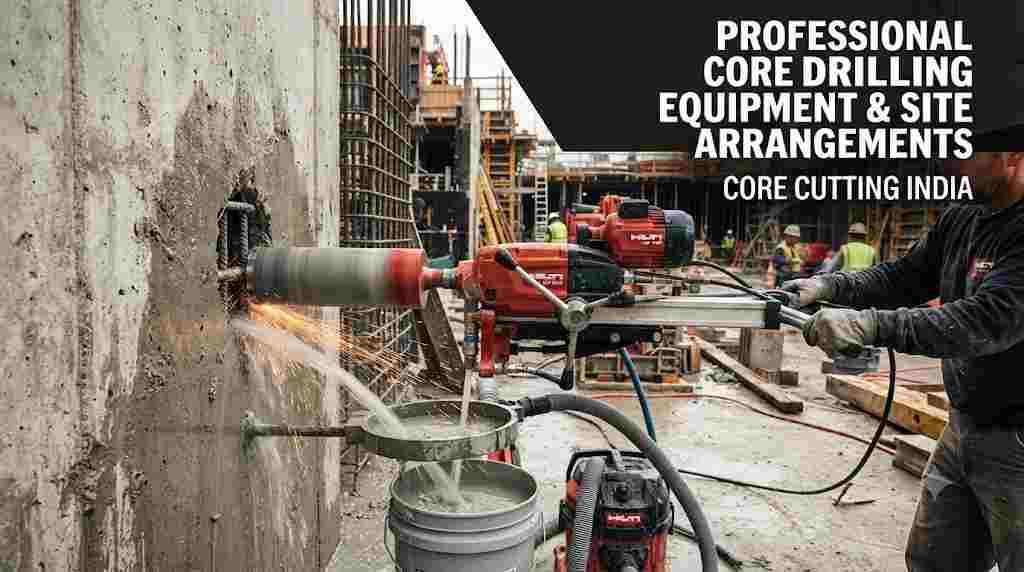
- Stand-mounted rigs are the standard for RCC. The motor sits on a column that is fixed to the wall or floor, giving a straight, steady cut.
- Hydraulic or heavy-duty rigs are used for large diameters, thick slabs or industrial work, where more torque and stability are needed.
For most homes and shops, a stand-mounted electric rig is the reliable choice. Ask the contractor which type they plan to use and why.
2. Diamond core bits
The bit does the cutting, and it is a consumable. A hollow steel barrel carries diamond segments on its edge, and those segments wear down with every hole.
A professional carries a range of bit diameters, so the hole matches the pipe or sleeve instead of being "close enough." They also keep bits in good condition. A worn or glazed bit cuts slowly, heats up and produces rough edges. If a team arrives with one battered bit for every job, expect a slow and untidy day.
3. Anchoring and mounting accessories
A rig must not move while cutting, otherwise the bit binds and the hole goes out of line. Teams secure the stand using one of these methods:
- Anchor bolts fixed into the concrete behind the stand.
- A vacuum base on smooth, sound surfaces where drilling the anchor hole is not suitable.
- Wedge or brace supports in certain overhead or shaft situations.
Which one is used depends on the surface. On a tiled or plastered wall, the crew will often need a point where the anchor can grip the concrete properly.
4. Water feed and slurry control
Wet core drilling uses water to cool the bit and wash out cuttings. A professional kit usually includes:
- A pressurised water tank or a hose arrangement.
- A slurry collection ring or vacuum so the muddy water does not run across your floor.
- Plastic sheets, tape and wiping cloths.
If a contractor says they need a "bucket and a tap" and nothing else, ask how they will keep slurry under control.
5. Scanning and detection tools
Before cutting, a careful crew checks for steel bars and embedded conduits. Detectors and scanners help locate these, and they are especially important in older buildings and in slabs where drawings are missing. If the job involves floors, read important checks before making openings in concrete slabs for a deeper look.
6. Power accessories
The team should carry heavy-duty extension cables, a suitable plug or adapter, and ideally a safety cut-out device. Many professionals also keep a small generator for sites where power is unreliable.
7. Access and safety gear
This includes:
- Ladders or a small scaffold for high holes.
- Helmets, safety glasses, gloves, ear protection and non-slip footwear.
- Barricade tape or cones for the area below an outside opening.
- A basic first-aid kit.
8. Cleanup tools
A good crew finishes the job properly: wet vacuum, mop, bags for debris and a way to remove the concrete core safely. It sounds minor, but cleanup separates a neat contractor from a messy one.
Part Two: Site Arrangements You Should Make
Think of the equipment as the contractor's half and the site as yours. Some of these items may be shared, so confirm responsibilities in advance.
| Arrangement | Who usually provides it | Why it matters |
|---|---|---|
| Working power socket | Site owner | Keeps the rig running steadily |
| Water access | Site owner (team brings tank or hose) | Cools the bit, controls dust |
| Clear working space | Site owner | Allows safe machine setup |
| Hole marking | Owner with installer | Ensures correct position and size |
| Permissions and timings | Site owner | Avoids society or landlord disputes |
| Machine, bits, anchors | Contractor | Core of the job |
| Safety gear and cleanup tools | Contractor | Protects people and finishes |
For a fuller breakdown, our core cutting preparation guide goes through who brings what.
Power
Check there is a working socket close to the cutting point. If not, tell the contractor early so they can carry longer cable or a generator. Avoid overloaded plug boards; a drilling rig draws more current than most household appliances.
Water
Make sure water is available on the same floor if possible. Carrying water up several stairs slows the work. In buildings where water is turned off at certain hours, schedule drilling around the supply.
Working space and access
Clear furniture and décor from the area. Leave a path from the entrance to the drilling point, wide enough for a stand and tank. If the hole is high, discuss ladder or scaffold arrangements so the crew does not improvise.
Surface protection
Cover floors, kitchen counters, electronics and fresh paint. If the hole breaks through to a balcony or facade, protect that side as well and keep the area clear underneath.
Permissions
Apartment societies, landlords and neighbours may need to know. Get approval in writing and confirm the permitted working hours before booking the team.
Hole marking
Mark the centre of each hole on both sides of the wall when possible. Confirm the diameter, height and slope with the AC installer, plumber or electrician. This is especially important for drainage and duct lines; our guide to planning concrete drilling for AC, chimney, exhaust fan and plumbing covers it in detail.
Matching Equipment to the Job
Different jobs call for different setups. A rough guide:
- Small AC or cable holes in brick or thin RCC: stand-mounted electric rig with a small to medium bit.
- Drain, soil pipe or exhaust ducts: a larger bit, firm anchoring and careful slurry control.
- Thick slabs, shafts or industrial work: a heavy-duty or hydraulic rig with extra water and power support.
- Large rectangular openings: this is usually wall cutting or slab cutting, which uses saws rather than a round bit.
If you are weighing diamond methods against hammering, read our comparison of diamond wall cutting vs traditional breaking.
Red Flags: When a Contractor May Not Be Properly Equipped
Watch out if the contractor:
- Arrives without a stand and tries to drill large holes by hand.
- Has no plan for water or slurry.
- Skips questions about wall thickness, material or what lies behind it.
- Cannot explain how they will protect your floors.
- Quotes a price without knowing hole size, number of holes or height.
- Has no safety gear or does not take safety seriously.
A professional will ask you questions first, and will often request photos before giving a quote.
How Equipment and Site Affect Cost
Costs reflect the effort and equipment needed. Larger diameters, deeper cuts, heavy reinforcement, work at height and difficult access all push the price up. Simple small holes in accessible places cost far less. On our platform, indicative rates commonly fall between ₹150 and ₹800 per hole, although complex jobs may cost more.
To get a realistic reference point before calling anyone, try the core cutting rate calculator. Then compare it with the quotes you receive.
Local Note for Punjab
In Punjab, equipment planning often comes down to power and space. During peak summer months, electricity demand rises and supply interruptions can happen, so contractors working in Ludhiana, Jalandhar, Amritsar, Patiala or Mohali often prefer to carry a backup generator or confirm power in advance.
Commercial and industrial settings, such as workshops, showrooms and factories common in Punjab's industrial belts, may need heavier rigs and longer cables because of thicker slabs and open floors. In housing societies around Mohali and Ludhiana, working hours and approval rules are often strict, which makes advance coordination even more important.
To find verified contractors who understand these local conditions, visit our core cutting service in Ludhiana, Punjab page.
A Simple Pre-Arrival Checklist
Before the team reaches your site, make sure you have:
- Confirmed hole size, position and number of holes.
- Cleared the area and covered finishes.
- Arranged a working power socket and water source.
- Checked permissions and working hours.
- Shared any drawings or details about hidden pipes and wiring.
- Told the contractor about height, access limits or special conditions.
Frequently Asked Questions
What equipment is needed for professional core cutting?
A stand-mounted core drilling machine, diamond core bits in the right sizes, anchoring accessories, a water feed with slurry control, scanning tools, power accessories, safety gear and cleanup equipment.
Does the contractor bring water and electricity?
Usually the contractor brings the machine, bits and accessories, while the site provides a power point and water access. Confirm this before the job to avoid surprises.
Why is anchoring important during core drilling?
A rig that moves while cutting produces crooked holes and can bind the bit. Proper anchoring keeps the cut straight and the operator safe.
Can core cutting be done without water?
Dry cutting exists for some situations, but wet cutting is the standard for concrete because water cools the bit and controls dust. Ask your contractor which method they will use.
How do I prepare my home for core cutting?
Clear the area, cover floors and furniture, arrange power and water, mark the hole position, check permissions and share any details about hidden pipes or wiring.
How can I get a quick quote?
Use our rate calculator or send your hole size, wall type, location and a photo on WhatsApp to 7009679903.
Conclusion
Professional core cutting is not about the loudest machine. It is about the right rig, a sharp bit, secure anchoring, controlled water, safe power and a site that is ready. When the contractor and the homeowner each handle their half of the preparation, the job is quick, clean and predictable.
Ready to book professional core cutting?
📞 Call: 7009679903 💬 WhatsApp: Chat now on 7009679903 ✉️ Email: info@corecuttingindia.com 🌐 Website: corecuttingindia.com
Call or WhatsApp 7009679903 today for a quick quote, verified contractors and clean, precise core cutting.