
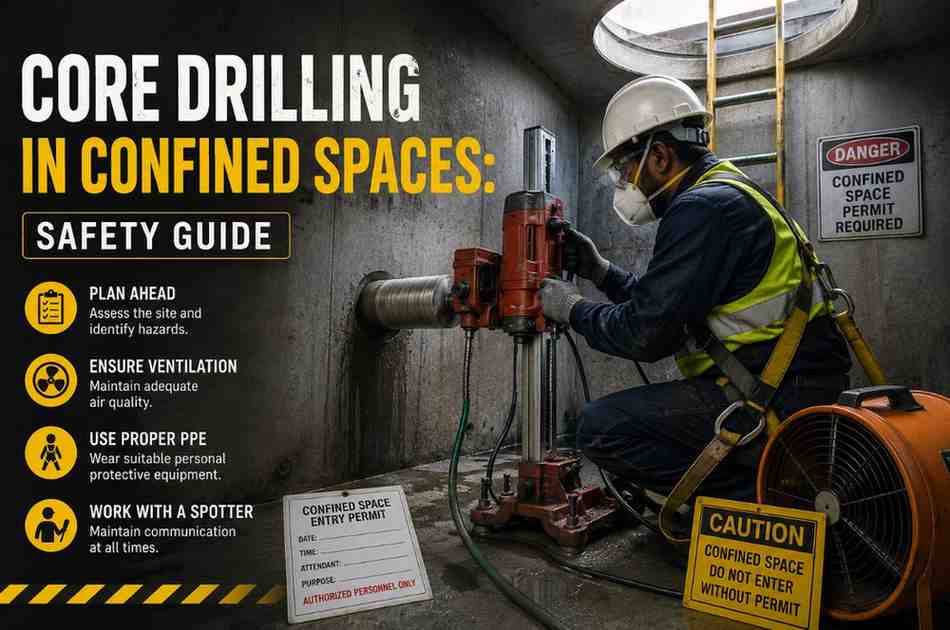
Introduction
Core drilling is an indispensable technique in modern construction, retrofitting, and infrastructure development. Whether creating pathways for plumbing, electrical conduits, or HVAC systems, precision core drilling delivers clean, accurate cylindrical openings through dense materials like reinforced concrete, masonry, and asphalt. However, when this high-powered operation moves from open construction sites into confined spaces—such as utility vaults, crawlspaces, shafts, tanks, and interior trenches—the risk profile increases exponentially.
Working in restricted areas transforms standard operational hazards into critical life-safety challenges. Limited entry and exit points, poor natural ventilation, and restricted movement compound the dangers of heavy machinery. At [email protected], safety is paramount. This comprehensive guide outlines the critical safety protocols, hazard assessments, equipment controls, and regulatory practices required to execute core drilling safely and efficiently in confined spaces.
Understanding Confined Spaces in Core Drilling
A confined space is defined by three primary characteristics:
-
Limited or restricted means for entry and exit (e.g., manholes, small access hatches, narrow shafts).
-
Unfavorable natural ventilation where airborne contaminants, toxic gases, or dust can rapidly accumulate.
-
Not designed for continuous human occupancy.
When concrete core drilling takes place within these boundaries, the environment shifts dramatically. Standard spaces can quickly transition into permit-required confined spaces due to the introduction of physical, chemical, and atmospheric hazards.
Major Hazards Associated with Confined Space Core Drilling
Before initiating any project, project managers and operators must identify and evaluate the specific hazards tied to confined space coring.
1. Respirable Crystalline Silica Dust
Core drilling utilizes diamond-impregnated bits to grind through concrete, generating massive amounts of fine, respirable crystalline silica dust. In an open area, this dust disperses; in a confined space, it becomes trapped. Inhaling these microscopic particles over time causes irreversible lung damage, including silicosis, chronic obstructive pulmonary disease (COPD), and lung cancer.
2. Atmospheric Hazards and Oxygen Depletion
Confined environments naturally lack adequate air circulation. Operating internal combustion engines or localized heaters can introduce lethal carbon monoxide (CO). Furthermore, chemical reactions, displacement by heavier gases, or oxidation can create an oxygen-deficient atmosphere (dropping below the safe threshold of 19.5%), leading to rapid unconsciousness and asphyxiation.
3. High Noise Levels and Vibration
Core drill motors produce intense noise levels, often exceeding safe thresholds. In confined concrete structures, sound waves bounce off hard surfaces, amplifying noise pollution and causing acute or chronic hearing loss. Simultaneously, heavy-duty drilling creates severe hand-arm vibration, inducing operator fatigue and loss of control.
4. Electrical and Utility Strike Hazards
Coring through walls and floors without prior scanning risks striking live electrical conduits, gas pipelines, or pressurized plumbing. In a confined space, striking a water line can rapidly flood the area, creating an immediate electrocution hazard or drowning risk. Striking a gas line can result in an instant explosion.
5. Ergonomic and Mechanical Entanglement Risks
Confined spaces restrict body movement, forcing workers into awkward postures while handling heavy drill motors, stands, and water-delivery systems. Loose clothing, hair, or gloves can also catch on rotating drill spindles, leading to severe crush or entanglement injuries.
Pre-Work Planning and Risk Assessment
A successful and safe core drilling operation relies heavily on pre-job planning and hazard mitigation strategies.
-
Site Characterization and Permitting: Determine if the workspace meets the criteria for a permit-required confined space. Establish a formal entry permit system detailing authorized personnel, duration of work, and required safety checks.
-
Non-Destructive Utility Locating: Utilize Ground-Penetrating Radar (GPR) or electromagnetic scanning to map embedded reinforcement bars, post-tension cables, live electrical lines, and pipes prior to setting up the rig.
-
Emergency Rescue Plan: Never work alone in a confined space. Establish a dedicated rescue team stationed outside the entry point equipped with retrieval systems, tripods, and communication devices.
Engineering Controls and Safety Equipment
Implementing robust engineering controls minimizes reliance solely on personal protective equipment (PPE) and creates a safer working climate.
1. Advanced Ventilation Systems
To combat toxic fumes, exhaust, and silica dust accumulation, continuous mechanical ventilation is mandatory.
-
Supply (Positive) Ventilation: Blows fresh air into the space.
-
Exhaust (Negative) Ventilation: Pulls contaminated air and dust directly away from the operator's breathing zone and flushes it out of the enclosure.
2. Continuous Air Monitoring
Before entry and throughout the duration of the drilling process, continuous atmospheric monitoring must be deployed. Gas detectors must check for:
-
Oxygen content (ideal range: 19.5% to 23.5%)
-
Flammable gases and vapors (Lower Explosive Limit checks)
-
Toxic gases like carbon monoxide (CO) and hydrogen sulfide ($H_2S$)
3. Wet Cutting and Slurry Management
To suppress silica dust effectively, wet drilling methods are standard. A continuous stream of water must be directed to the drill bit interface to trap dust at the source.
-
Ensure water flow rates are optimized—too little water overheats and glazes the diamond bit, while too much floods the confined work area.
-
Utilize HEPA-filter industrial wet vacuums or immediate containment systems to clean up slurry, preventing it from drying and re-releasing airborne silica particles.
4. Electrical Safety & GFCIs
Because water is actively used near high-powered electrical core drills, the risk of shock is high. All equipment must be plugged into Ground-Fault Circuit Interrupters (GFCIs) utilizing watertight, heavy-duty, sealable electrical connectors.
Proper Rig Anchoring and Operational Best Practices
Stability is critical when operating high-torque core drills in tight zones.
-
Secure Mounting: Anchor the core drill stand firmly using mechanical anchors or proper masonry fasteners. Avoid using vacuum-hold down bases on vertical walls or confined spaces where vacuum loss could cause the entire rig to detach.
-
Controlled Feed Pressure: Apply steady, minimal pressure when starting a hole to establish a clean groove. Never force or push the drill bit too hard; let the diamond segments cut at a natural pace, especially when encountering steel rebar.
-
Gear Management: Never attempt to change gears while the drill motor is running. Always match the spindle speed to the diameter of the core bit.
Personal Protective Equipment (PPE) Requirements
Even with strict engineering controls, operators working in confined spaces must wear appropriate personal protective gear:
-
Respiratory Protection: NIOSH-approved N95 or half-mask respirators with HEPA filters when dust mitigation is insufficient.
-
Eye and Face Protection: Safety goggles or full-face shields to guard against flying concrete debris and water splash.
-
Hearing Protection: Rated earplugs or earmuffs to reduce the impact of high-decibel motor noise.
-
Hand and Foot Protection: Steel-toe safety boots with slip-resistant soles (crucial for wet, slurry-covered floors) and snug, cut-resistant gloves. Note: Avoid loose clothing or uncontained long hair that can cause entanglement hazards.
Conclusion
Core drilling in confined spaces presents a complex matrix of physical, atmospheric, and mechanical hazards that leave no room for error. From controlling invisible silica dust and managing oxygen levels to ensuring absolute structural and electrical security, adherence to strict safety protocols is mandatory.
By prioritizing comprehensive risk assessments, deploying advanced ventilation, utilizing proper wet-cutting techniques, and maintaining certified equipment, professionals can achieve precise results safely and efficiently. For expert, reliable, and safety-compliant concrete solutions, trust the professionals at [email protected] to handle your most challenging core drilling projects with precision and care.