
Introduction
In the world of modern construction, infrastructure modification, and structural renovation, precision is everything. Creating pathways for plumbing, electrical conduits, HVAC systems, and structural anchors often relies on one primary technique: diamond core drilling. Among the various methods available, wet core drilling stands out as the industry standard. By introducing a continuous stream of water to the cutting interface, operators can effectively suppress hazardous silica dust, cool expensive diamond-tipped bits, and flush away abrasive slurry.
However, this reliance on water introduces a silent and lethal adversary: electricity.
Water is an effective conductor. When high-voltage electrical equipment operates in proximity to flowing water, damp environments, and conductive concrete slurries, the margin for error shrinks to virtually zero. A single compromised insulation layer, a pinched power cord, or an ungrounded generator can transform a routine construction site into a fatal electrocution zone.
At [email protected], we prioritize absolute safety alongside operational excellence. This comprehensive guide explores the critical intersections of water, high-powered machinery, and electricity, offering actionable safety protocols to protect workers, equipment, and structural integrity during wet core drilling operations.
Understanding the Core Hazards of Wet Core Drilling
Before diving into safety protocols, it is vital to understand why wet core drilling presents unique electrical challenges. Unlike dry environments where air acts as a natural insulator, wet drilling creates a continuous conductive pathway from the machinery right down to the operator's feet.
1. The Conductor Paradox
Water used in construction is rarely pure; it mixes with concrete dust, creating a mineral-rich, highly conductive slurry. If an internal short circuit occurs within the core drill motor, or if a frayed cable comes into contact with the cooling water runoff, the entire pool of water surrounding the work area becomes live.
2. High Torque and Mechanical Stress
Core drills are high-torque machines. As the heavy-duty motor strains against reinforced concrete (rebar), it vibrates violently. This constant mechanical stress places immense pressure on power cords, plug connections, and internal wiring. Over time, cable sheathings wear down, exposing bare wires to moisture and human touch.
3. Hidden Subsurface Utilities
Electrical hazards do not always stem from the drill itself. Concrete slabs frequently conceal live electrical conduits, active circuits, and grounding lines. Striking a hidden energized conduit with a steel core bit while standing in a pool of cooling water creates an immediate, catastrophic arc flash and shock hazard.
Pre-Operational Safety Checklist
Safety begins long before the drill bit touches the concrete surface. A rigorous pre-work inspection protocol eliminates foreseeable equipment failures and sets a secure baseline for the project.
Structural and Utility Scanning
-
Ground Penetrating Radar (GPR): Always map the subsurface area using GPR or electromagnetic scanning tools before deploying a core drill. Identifying embedded electrical lines prevents accidental strikes.
-
De-energize Circuits: If drilling near known electrical pathways, coordinate with site managers to shut off and lockout/tagout (LOTO) the specific circuits beforehand.
Equipment and Cable Inspection
-
Inspect Power Cords: Thoroughly examine the entire length of the drill's power cord. Look for cuts, abrasions, exposed copper, or cracked insulation. Never use taped or compromised cables.
-
Check Water Hoses and Seals: Inspect water delivery lines, valves, and O-rings. Ensure that water cannot leak into the motor housing, switches, or internal electrical compartments.
-
Verify Double Insulation or Grounding: Ensure that electric core drills are either double-insulated (marked with a square-within-a-square symbol) or equipped with a proper three-prong grounded plug. Never remove or bypass the ground pin.
Electrical Protection Mechanisms: The Life-Savers
When working with water and electricity, standard precautions are not enough. Industry best practices and occupational safety standards mandate specific engineering controls.
+-------------------------------------------------------------+
<span>          CRITICAL ELECTRICAL SAFETY LAYERS                   <span>
+-------------------------------------------------------------+
| 1. Ground Fault Circuit Interrupter (GFCI) Protection       |
| 2. Industrial-Grade Watertight Connectors                   |
| 3. Heavy-Duty 10-Gauge Grounded Extension Cords             |
| 4. Comprehensive Slurry and Water Runoff Management         |
+-------------------------------------------------------------+
Ground-Fault Circuit Interrupters (GFCIs)
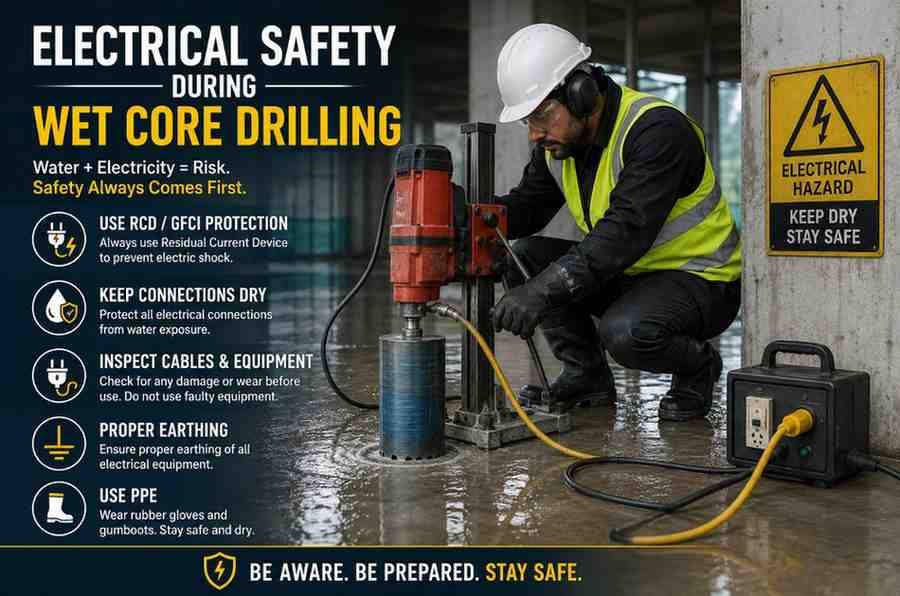
A GFCI is non-negotiable during wet core drilling. GFCIs monitor the balance of current flowing between the hot and neutral wires. The moment an imbalance is detected—indicating that current is leaking through water or a human body—the GFCI trips within milliseconds, cutting off the power supply before a fatal shock can occur.
-
Always test the GFCI unit using its "Test" and "Reset" buttons before plugging in the core drill.
-
Use portable GFCI inline adapters if the permanent job site receptacle lacks built-in ground-fault protection.
Extension Cord Standards
-
Gauge Matters: Use heavy-duty, extension cords rated at least 10-gauge. Undersized cords cause voltage drops, leading to motor overheating, insulation breakdown, and electrical resistance fires.
-
Weather Ratings: Ensure all extension cords and power blocks are explicitly rated for outdoor or wet-location use (marked with designations like "W" or "W-A").
-
Keep Connections Elevated: Never allow plug connections and power strips to sit in puddles or wet concrete slurry. Suspend connections or use watertight, lockable sealable enclosures.
Safe Operating Practices During Drilling
Maintaining focus and disciplined execution during the coring process minimizes unexpected electrical incidents.
Water Flow Management
-
Regulate Pressure: Optimize water flow to roughly 1 to 2 gallons per minute, or follow manufacturer guidelines. Excessive water flow does not improve cooling; instead, it floods the workspace, increases slip hazards, and heightens the risk of water ingress into the electrical motor.
-
Containment Systems: Deploy wet vacuum recovery systems and slurry collection rings immediately around the drill base. This prevents conductive water from spreading across the floor toward unshielded power sources or other workers.
Ergonomics and Rig Stability
-
Rig Anchoring: Ensure stand-mounted core drills are securely bolted, vacuum-anchored, or shored into place. A shifting drill rig can place extreme lateral force on the machine, pinching cords or fracturing housing casings.
-
Never Force the Tool: Allow the diamond segments to cut at their own pace. Forcing the drill increases mechanical strain, motor heat, and the likelihood of electrical faults.
Personal Protective Equipment (PPE) for Wet Coring
Engineering controls must be backed by appropriate personal protective equipment designed to insulate the operator from electrical and physical hazards.
-
Dielectric Rubber Boots: Waterproof, industrial-grade rubber boots with non-slip soles provide a critical layer of insulation between the operator and a wet, conductive floor.
-
Heavy-Duty Rubber Gloves: Waterproof gloves protect against cement dermatitis (caused by wet alkaline concrete slurry) while offering partial secondary resistance against minor electrical contact.
-
Eye and Face Protection: Safety glasses or full face shields protect against flying debris, pressurized water spray, and concrete chips.
-
Hearing Protection: Earplugs or earmuffs mitigate the high-decibel noise generated by heavy-duty core motors.
Emergency Response Protocols
Even with meticulous planning, emergencies can occur. Every crew member must understand what actions to take if an electrical incident happens on-site.
-
Never Touch the Victim Directly: If a worker experiences an electric shock, do not touch them directly if they are still in contact with the live current or conductive water. Doing so makes you the secondary conductor.
-
Cut the Power Immediately: Instantly shut off the main power source, trip the circuit breaker, or unplug the master supply line. Know the exact location of all emergency shut-offs on the job site.
-
Use Non-Conductive Objects: If power cannot be immediately cut, use a dry, non-conductive object (such as a wooden plank, fiberglass pole, or heavy rubber mat) to push or pull the victim away from the electrical source.
-
Administer First Aid & Call Emergency Services: Once the victim is safe, check for breathing and pulse. Administer CPR or use an Automated External Defibrillator (AED) if trained, and immediately contact local emergency medical services.
Conclusion
Wet core drilling is an indispensable technique that unlocks structural potential across civil engineering and construction landscapes. However, combining high-voltage electricity with water-cooled machinery demands absolute respect, rigorous preparation, and unyielding adherence to safety protocols.
By prioritizing pre-work utility scans, deploying robust GFCI protection, managing water slurry effectively, and equipping teams with proper PPE, construction professionals can eliminate electrical risks entirely. Safety is never an accident—it is the result of deliberate choices, continuous training, and uncompromising standards.
For professional, safe, and precise core cutting solutions tailored to your project requirements, reach out to [email protected] today. Let us help you build a safer, stronger tomorrow.