
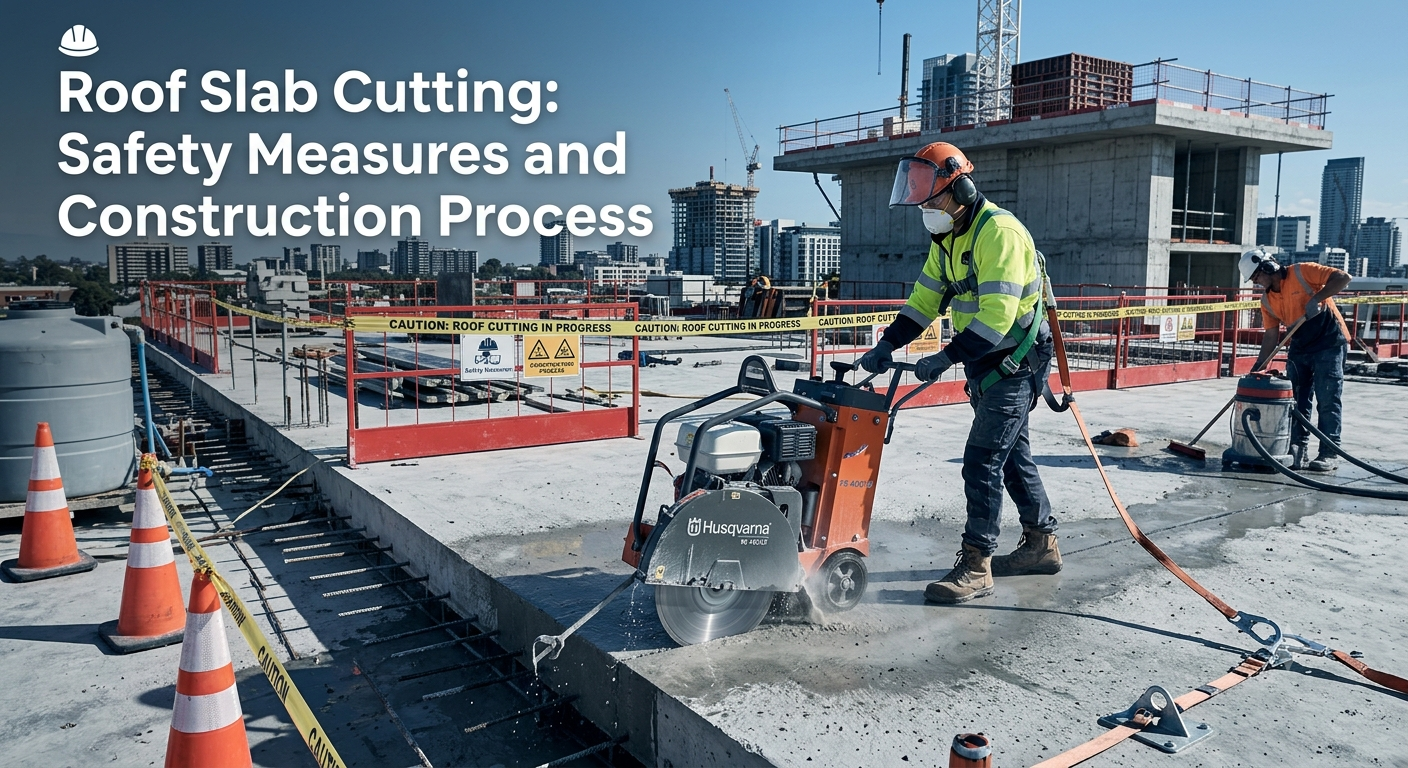
Roof slab cutting has become one of the most in-demand structural services across Indian cities, from high-rise renovations in Mumbai to villa extensions in Bangalore and industrial retrofits in Pune and Chennai. Whether it's creating an opening for a staircase, installing a skylight, adding a lift shaft, or modifying an RCC (Reinforced Cement Concrete) roof for plumbing and HVAC ducts, roof slab cutting requires precision engineering, the right equipment, and strict safety protocols.
At Core Cutting India ([email protected]), we specialise in structural concrete cutting services across residential, commercial, and industrial projects. In this blog, we break down everything you need to know about roof slab cutting — the equipment involved, the step-by-step construction process, and the safety measures that protect both workers and the structural integrity of the building.
What Is Roof Slab Cutting?
Roof slab cutting is a specialised construction technique used to cut, remove, or modify sections of an RCC roof slab without causing structural damage to the surrounding building. Unlike traditional demolition, which relies on hammering and breaking, slab cutting uses diamond-tipped tools that cut cleanly through concrete and embedded steel reinforcement with minimal vibration, dust, and noise.
This method is widely used in India for:
- Creating openings for internal staircases in duplex flats
- Installing skylights or ventilation shafts
- Adding lift wells in existing multi-storey buildings
- Cutting service openings for plumbing risers, drainage pipes, and electrical conduits
- Structural modifications during building renovation or floor addition
- Removing damaged or weakened slab sections for repair
- Creating openings for solar panel installation frameworks on terraces
Cities like Mumbai, Delhi NCR, Bangalore, Pune, Hyderabad, and Chennai have seen a sharp rise in demand for such services, largely driven by vertical expansion of older buildings, retrofitting of commercial complexes, and renovation of residential societies built decades ago under older construction norms.
Why Precision Matters in Roof Slab Cutting
An RCC roof slab is not just a flat concrete surface — it's a load-bearing structural element reinforced with steel bars (rebar) that distribute weight across beams and columns. Cutting into it without proper engineering assessment can compromise the load path, leading to cracks, deflection, or in severe cases, structural failure.
This is why roof slab cutting in India is typically carried out only after a structural engineer's assessment confirms which sections of the slab can be safely cut, how much reinforcement can be exposed, and whether temporary support (propping) is required during the process.
Equipment Used in Roof Slab Cutting
Modern slab cutting in India relies on diamond cutting technology, which has largely replaced older jackhammer-based demolition for precision work. Common equipment includes:
1. Diamond Wall Saw / Track Saw
Mounted on a guided track, this machine makes deep, straight cuts through concrete slabs and walls. It's commonly used for large rectangular openings, such as staircase cutouts or lift shafts.
2. Diamond Wire Saw
Used for very thick slabs or where access is limited, a diamond-coated wire loops around the concrete section and cuts through it gradually. This is often the preferred method for cutting slabs in congested urban sites where vibration and noise need to be minimised, such as in South Mumbai's older residential buildings or Delhi's Lutyens zone properties with heritage restrictions.
3. Handheld Diamond Cutters / Circular Saws
Used for smaller openings, edge trimming, or finishing cuts around service pipe penetrations.
4. Core Drilling Machines
While primarily used for circular holes (for pipes, cables, or bolts), core drills are often used alongside slab cutting to create pilot holes or anchor points for wire saw setup.
5. Hydraulic Splitters and Crane/Chain Hoists
Once a slab section is fully cut, hydraulic splitters help separate the piece, while chain hoists or cranes lift and remove the cut concrete block safely — especially important on upper floors of high-rise buildings.
Step-by-Step Roof Slab Cutting Construction Process
Step 1: Site Survey and Structural Assessment
Before any cutting begins, a structural engineer inspects the roof slab using drawings, rebar detection tools (like GPR — Ground Penetrating Radar or rebar scanners), and load calculations. This step identifies the exact reinforcement layout, slab thickness, and load-bearing zones to avoid.
Step 2: Permissions and Documentation
In India, structural modifications to an existing building — especially in registered housing societies — often require a No Objection Certificate (NOC) from the society, a structural stability certificate, and in some cities, municipal corporation approval (such as from BMC in Mumbai or DDA/MCD in Delhi) if the modification affects the building's original sanctioned plan.
Step 3: Site Preparation
The work area is cordoned off with barricades and warning signage. Furniture, fixtures, and utilities in the vicinity are relocated or protected. If the cutting is happening on an occupied floor, the area below is also cleared and marked as a restricted zone.
Step 4: Temporary Propping and Support
If the slab section to be cut is load-bearing or spans a large area, temporary steel props (Acrow props) or shoring systems are installed on the floor below to support the load during and after cutting, preventing sudden deflection or collapse.
Step 5: Marking and Layout
The exact cutting lines are marked on the slab surface based on the engineer's approved drawing, ensuring the opening aligns with architectural requirements (like staircase width or duct size) while avoiding major structural members.
Step 6: Wet Cutting with Diamond Tools
Cutting is performed using diamond wall saws or wire saws with a continuous water supply. Water serves two purposes — it cools the diamond blade to prevent overheating and suppresses concrete dust, which is a major health hazard in dry cutting.
Step 7: Segment Removal
Once the cuts are complete, the slab section is separated using hydraulic splitters or controlled lifting equipment. On upper floors, a crane, chain block, or motorised hoist lifts the concrete segment out through the opening or lowers it via an external chute to the ground level.
Step 8: Edge Finishing and Reinforcement Treatment
Cut edges are smoothed, and any exposed rebar is either treated with anti-corrosive coating or tied into new reinforcement if the opening will be finished with a new slab edge, staircase landing, or frame.
Step 9: Waste Management and Debris Disposal
Concrete debris is collected and removed through designated chutes or lifts, following local municipal solid waste and construction debris disposal norms — an increasingly monitored requirement in cities like Bangalore and Pune under Construction & Demolition (C&D) waste rules.
Step 10: Final Inspection
A structural engineer conducts a final inspection to confirm the opening meets design specifications and that no unintended cracks or stress points have developed in the surrounding slab.
Safety Measures During Roof Slab Cutting
Concrete cutting, especially on roofs and upper floors, carries significant risk. At Core Cutting India, safety is treated as a non-negotiable part of every project. Key safety measures include:
1. Structural Risk Assessment First
No cutting begins without engineering sign-off. This is the single most important safety measure, as it prevents accidental cutting of primary load-bearing reinforcement.
2. Personal Protective Equipment (PPE)
Workers are required to wear safety helmets, cut-resistant gloves, safety goggles, ear protection (given the noise from saws), steel-toe boots, and dust masks or respirators, particularly important given India's warm climate and long working hours on exposed rooftops.
3. Fall Protection Systems
Since roof slab cutting often happens at height, safety harnesses, guardrails, and edge protection barriers are mandatory around the cutting zone and any temporary openings, in line with Indian occupational safety norms under the Building and Other Construction Workers (BOCW) Act.
4. Dust and Water Management
Wet cutting techniques control dust, but proper drainage arrangements are also needed to prevent water accumulation, which can create slip hazards or seep into floors below.
5. Electrical Safety
Since diamond saws and drilling equipment run on electric or hydraulic power, all cables and connections are checked for insulation, earthing, and protection from water exposure — critical during monsoon-season projects in cities like Mumbai and Kolkata.
6. Controlled Lifting and Rigging
Heavy cut slab segments are lifted using rated lifting equipment operated by trained personnel, with exclusion zones marked below to prevent anyone from standing under a suspended load.
7. Continuous Supervision
A site supervisor or safety officer monitors the cutting process throughout, ensuring props remain stable, cutting lines are followed accurately, and workers follow safety protocols at every stage.
8. Emergency Preparedness
First-aid kits, fire extinguishers (important given cutting sparks near any combustible material), and emergency contact protocols are kept ready on-site, especially for projects in densely built urban areas where emergency vehicle access can be limited.
Common Applications of Roof Slab Cutting in India
- Residential renovations: Homeowners in Gurgaon, Noida, and Bangalore often cut roof slabs to add internal staircases connecting duplex or triplex units.
- Commercial retrofits: Office buildings in business districts like BKC (Mumbai) or Cyber City (Gurgaon) use slab cutting to install new service risers or HVAC ducting during renovation.
- Industrial facilities: Factories and warehouses across industrial belts in Gujarat and Tamil Nadu use slab cutting for machinery foundation modifications and skylight installations for natural lighting.
- Heritage and older buildings: In cities like Kolkata and Delhi, older RCC structures often require careful slab cutting for modern utility upgrades while preserving structural heritage value.
Why Choose Professional Slab Cutting Services
Attempting roof slab cutting without professional expertise — using jackhammers or improvised tools — often results in excessive cracking, damaged reinforcement, and costly structural repairs. Professional diamond cutting services offer:
- Precise, clean cuts with minimal vibration to the surrounding structure
- Reduced noise and dust pollution, important for occupied buildings and housing societies
- Faster project timelines compared to manual demolition
- Compliance with structural safety norms and municipal regulations
- Trained, insured workforce equipped with modern safety gear
Conclusion
Roof slab cutting is a technically demanding process that blends structural engineering, specialised equipment, and rigorous safety practices. From the initial structural survey to the final inspection, every step is designed to protect both the building's integrity and the safety of the workers involved. As Indian cities continue to grow vertically and older buildings undergo renovation, the demand for professional, code-compliant slab cutting services will only increase.
If you're planning a roof slab modification — whether for a staircase opening, skylight, lift shaft, or utility duct — it's essential to work with experienced concrete cutting professionals who understand both the technical and regulatory landscape of Indian construction.
For expert roof slab cutting services backed by structural safety assessments and modern diamond cutting technology, reach out to Core Cutting India at [email protected].
Frequently Asked Questions
1. What is roof slab cutting used for? It's used to create openings in RCC roof slabs for staircases, skylights, lift shafts, plumbing and electrical ducts, or to remove damaged concrete sections for repair.
2. Is roof slab cutting safe for the building structure? Yes, when performed by trained professionals following a structural engineer's assessment, with proper propping and support in place. Unplanned or unsupervised cutting can weaken the structure.
3. What is the cost of RCC slab cutting in India? Costs vary based on slab thickness, location, accessibility, and cutting method, and typically range depending on square footage, equipment used, and site conditions. It's best to get a site-specific quote from a professional contractor.
4. Which machine is used for slab cutting? Diamond wall saws, diamond wire saws, handheld diamond cutters, and core drilling machines are the primary tools used, depending on the size and location of the cut.
5. How long does it take to cut a roof slab? Duration depends on slab thickness, reinforcement density, and opening size — smaller openings may take a few hours, while larger structural modifications can take one to several days, including prep and finishing work.
6. Can slab cutting be done without affecting the floors below? Yes, with proper propping, wet cutting techniques, and controlled segment removal, professional teams can minimise vibration and impact on floors below the cutting zone.
7. What safety precautions are taken during concrete cutting? Key precautions include structural risk assessment, PPE for workers, fall protection at height, dust and water management, electrical safety checks, and controlled lifting of cut concrete segments.
Core Cutting India | [email protected]